Montréal Contre-information
Apr 172015
 

On April 8th, a banner reading “Solidarité avec les prisonniers en grève de la faim en Grèce. Que vive l’anarchie (Solidarity with prisoners on hunger strike in Greece. Long live anarchy)” was dropped along with flyers bearing the following text:

Solidarity from Montreal

Today, we paid homage to those prisoners in Greece who are on hunger strike since March 2nd, 2015.

The governing political party in Greece since January 2015 is the radical leftist party Syriza, a party which promotes anticapitalist and antipatriarchal ideas. However, it is clear this party’s role in reality is to recuperate all social rebellion. Many anarchist prisoners, political prisoners, and social prisoners recognize this and live the consequences each day.

A hunger strike was thus called to demand, among other things, the abolition for several fascist laws and Type C prisons. Many comrades are experiencing severe health problems for their participation in the strike. These events show the true face of the ruling Left party, which continues to repress struggle.

Here are the demands of the prisoners on strike:

• Abolition of the antiterrorist law 187A and the law against illicit organisations 187
• Abolition of the increased severity for actions committed with facial characteristics disguised (“the mask law”)
• Abolition of maximum security prisons Type C
• Abolition of laws permitting the testing of DNA traces
• Access for expert witnesses of the accused to DNA-related evidence
• Abolition of DNA analysis of evidence containing a mix of more than two people’s DNA
• The immediate liberation of Savvas Xiros so that he may receive the medical treatment he requires.

Strength and courage to those in prison and on the run!
For the destruction of the state, capitalism, and all prisons.
Long live anarchy.

More information:
contrainfo.espiv.net
hunger-strike.espivblogs.net
www.non-fides.fr

Apr 132015
 

quebec

International call for solidarity actions – 13th-17th April 2015
Against repression at the University of Quebec (UQAM) and everywhere

On March 21st 2015, students from Quebec (Canada) launched a political strike against austerity measures and hydrocarbon extraction. Our social movement takes place in the context of generalised repression, where demonstrations are forbidden and brutally clamped down upon through various municipal by-laws. Thousands of people have thus been arrested in the last three years, receiving $640 of fines for the luckiest and criminal charges for the rest.

For weeks now we have been confronted with even greater repression, inside the walls of our university. The movement as a whole has shown great courage, responding blow for blow to this repression, but now we need your help.

These last days a sequence of events has weighed us down:

– At the end of March, nine students were summoned from UQAM’s executive counsel. Without the possibility of any appeal, and bypassing normal procedures, these students are threatened with the university’s most severe sanction: their definitive expulsion. In some cases, they are accused of acts that go back to winter 2013.

– UQAM has ordered a court injunction forbidding us to prevent courses from being held, as well as ANY activity related to the strike.

– On April 8th, after students had interrupted courses, UQAM’s administration called the police, who arrested 21 people inside the university. They are now forbidden from approaching the university and also face criminal charges.

In reaction to all this, since April 8th, general assemblies from various departments have decided to continue the general strike, adding these demands:

To cancel the court injunction and of the judicial repression of the social movement.

To forbid police on campus

To abandon prosecution against the nine political expulsions

We need your help!

This is a call for an international week of solidarity actions from April 13th-17th 2015. Our university, UQAM, cares a lot for its public image, so we invite you to take action, to the extent of your means and possibilities.

Whatever you plan to do, don’t hesitate to recount your events, by writing to us at the following address: solidariteactionuqam[at]gmail.com

Against repression, by all means necessary!


Signed: Students and student employees from UQAM

Apr 092015
 
« of 7 »

RESPECT to the strike defenders at UQAM and their allies. It was a full-day battle today (April 8), from early morning till late night. I only observed first-hand the crescendo tonite, after the intervention of what was clearly over 100+ riot police, backed up by bike cops, at the Da Sève Building occupation. The resilience of UQAM resisters is inspiring.

For a sense of what happened earlier today at UQAM, and the solidarity and support shown by students when the cops got called in, check out this video: www.youtube.com/watch?v=ViEFO-Wq1DE

There were 21 arrests (some reports of 22) with at least 11 women-identified protesters among the group. There would have undoubtedly been more arrests if not for the fight-back by students. People arrested are facing criminal charges (mischief, illegal assembly). Many of those arrested weren’t released until just a few hours ago.

A student strike is messy, especially with a repressive administration, scab-enabling mainstream media, and certain moderate sectors of the movement that has second-guessed a strike that “this time” is too radical in scope and not firmly controllable. Student strikes are at their heart the grassroots students and their support networks actually enforcing and defending the strike (a much fewer number of dedicated activists, disproportionately the so-called masked radicals, and definitely not mainstream-media friendly).

Because of the police intervention in the afternoon, and the arrests of dear comrades, students and supporters had a spontaneous assembly in the Da Sève Building (near Ste-Catherine & St-Denis) that turned into an open-ended occupation.

I got there after 9:30pm tonite, and the atmosphere at the occupation was festive and rambunctious. Music, dancing, food, conversation, and a lot of debriefing of what’s been happening in the past few days and week, particularly the heavy-handed approach of UQAM administration. There were several hundred people present.

[A musical highlight was George Moustaki’s “Sans la nommer”: www.youtube.com/watch?v=ouaytC9njFU]

I didn’t see anything directly myself, but I eventually saw the aftermath of the systematic removal of UQAM’s pervasive surveillance cameras. Kudos to whoever was involved with that! Amazing work.

Eventually, it was obvious that the police would intervene, after getting a request from the UQAM administration. The SPVM (Montreal police) even tweeted about it: https://twitter.com/SPVM/status/586020599505510400

It was also clear what the police had in mind via their communications on police radio (which I only heard about second and third-hand: it was journalists who were listening to the scanner most intently). The cops were claiming: “we want arrests, not a dispersion” and they made sure to talk about the ambulances that were on-call to deal with anticipated injuries.

I was part of the outside support group, while inside the building was fully barricaded. All available furniture and material – chairs, desks, couches, shelves, recycling boxes, garbage bins – became barricades to keep the cops out. A huge oversize banner – with the expression: Oser lutter, c’est oser vaincre [Daring to struggle is to dare to win] – was used to cover the metro level approach to the main occupation area. Here’s a photo of the banner from a demo: https://pbs.twimg.com/media/CBm5UdPUIAM42Ro.jpg:large

Around 12am, the occupation divided into the people barricading inside, and the outside supporters (I was in the latter group). I personally observed at least 100 police officers mobilized to take over the street and break into the occupation. Here’s a video of the cops breaking the doors to get in: www.facebook.com/video.php?v=10152634831047583

Meanwhile, outside, the group I was part of (on Ste-Catherine, moving east) was attacked with tear gas and pepper spray, while being pushed back by bike cops and riot cops in succession.

Eventually, I headed back to the QPIRG Concordia mothership, but not before trying to get reports of possible arrests inside. The early reports are of upwards of five or more arrests, which are minimal compared to the numbers who were actually barricaded inside. But, it’s a big building, with lots of spaces to avoid cops, and lots of ways to get out (so, a big fuck you to the SPVM and UQAM administration).

Solidarity with all who kept up the fight inside Da Sève, and of course with everyone who was arrested and now facing criminal charges, and their support people.

[If you’re facing criminal charges and want some support, don’t hesitate to get in touch with Contempt of Court: A Legal Clinic by and for Social Movements / Outrage au tribunal: clinique juridique par et pour les militantes et militants: www.outrageautribunal.net]

Already, there are multiple responses planned today (Thursday, April 9), with at least three demos, starting at 8:45am (rendez-vous: J-M770), another in the afternoon, and yet another night demo slated for 8pm (rendez-vous: Place Émlilie-Gamelin / métro Berri-UQAM).

With the unabashed entry of police, including armed riot police, into the heart of a university campus seen as a linchpin of the social strike against austerity, the ever-evolving Spring 2015 has decisively escalated.

– Jaggi Singh, member of No One Is Illegal-Montreal.

twitter: @JaggiMontreal

Apr 082015
 

Comrades, I am writing these few lines to let you know about my present condition of life, which I have decided upon from a very particular perspective following a series of situations that have arisen in the recent context of individual and / or social struggle and the repression against it.


There is a long list of comrades who have been harassed and investigated for anarchist activity recently in this country, more specifically in the centre and the south, putting them under surveillance to observe their movements and the people with whom they organize, sending vile bastard informers to gather information, accusing foreign comrades of financing struggles and so on. Also at the time of the arrest that led me to prison with my comrades in affinity Amélie and Fallon, there was an attempt to link many people of the libertarian / anarchist milieu with our case (5E), upturning some houses to find “evidence” (without success) and thereby have more arguments to mount a serious blow within the anarchist scene.

This resulted in the subsequent arrest of comrade “Tripa” (and the persecution of other comrades who also had to move away). Fortunately he was able to count on the timely response of the comrades of GASPA to get him away immediately because the prosecution was not clear, and after his quick decision to go on the run there was not much choice since he was accused on the basis of his “criminal” history and linked to the investigation of terrorism, sabotage and other bullshit that they wanted to pin on us, so he did not have many alternatives.

For similar reasons and being able to choose freely, I decided to take the road of going on the run, mainly for my own safety and that of other comrades, due to the tracking that had been put in act. I am not the first nor will I be the last to do so, choosing a path of struggle that consists partly of taking back my own life, but which also carries the violent, frontal and refractory side against all authority. You don’t need to be a scholar to realize that you will be targetted by the investigators and prosecutors trying to connect to you / implicate you in any question of direct action generated in the battlefield. And in my case, on bail and signing in, it is certain that they would have me at their mercy to take me in whenever they felt like it, a pleasure that I was not prepared to give them, at least as far as I could.

Besides not having the least intention of collaborating with that fucking little legal theatre that would have continued after my release I decided from the first moment of my physical release not to become their prey by being controlled through periodic visits to the place I was supposed to present myself to display my horrendous signature for a further year and a half. So I decided not to present myself before the judges the next day, to break with this thing that I see as tracking.

This does not mean that I am walking away from the struggle or regret what I will have to live in order to carry it out. On the contrary, it will continue to be the main personal factor pushing me in this insurrectional position towards the unknown of freedom. From “outside” it is also possible to continue the daily life of permanent attack in its extensive forms and content, seek to continue my projects from elsewhere but with the same vision, being clear that it is not my intention to take my struggle to voluntary clandestinity or to seek a specialized or higher form of attack, but just to know that these are some of the consequences we face and undertake to move along these paths of conflict, to do things by what we believe and how to make this possible and necessary.

I always knew that fiercely opposing the forms of subordination and ideological content that the technicians of the democratic lie employ to maintain their privileges and status quo, would bring with it circumstances adverse to what any “normal ” person would wish for their life. But as I do not want to be that kind of normal person and accept being another slave, I indulged in doing it this way, as would any irreducible seeking life from his way of seeing things.

From the point of view of comfort it would be much easier for me, after getting out of prison and walking in the street, to see my family and friends and be with my darling daughter; as well as being with comrades and affinities of various tendencies to continue to act together. But realising that this is not a game and that the struggle must be to the end, it is necessary to give it the seriousness it requires because sometimes we must make decisions that can be painful due to the physical distance from those we love. That is why I do not consider going on the run to be the only solution, but the one closest to how I see things. I have seen fit to do so, among other things, as I said, to avoid monitoring and attempts to connect me with future violent acts similar to those for which I was imprisoned, and these being linked with other comrades and whoever I could have contact with. Because we know how the State and its minions use the law, but all this is not in terms of fear, but starts from the fact that taking care of our own is also an insurrectionary act.

Part of my individual insurrection consists of breaking with any form of attachment, and a large part is the constant destruction of any personal / social relationship emanating from the hated enemy State / Capital and any authority, against which I declare myself at war within the range of my ability. Such relationships as are reflected in the alienated society that reproduces what it learns in its educational and religious institutions, its media and economic / technological production, and its ways of behaving in various aspects of everyday life that all lead to domination. Hence my need to not participate in the legal game or be a “good citizen” who can demonstrate that the punishment imposed by the laws and their mentors works. To hell with all that!
That’s why I’d rather die than seek any concessions, mediation, assistance or pact with the very enemy I wish to destroy, understanding that everyone has their perspectives and ways of doing things, respecting what each one does in their struggles, and supporting those with whom I feel an affinity or at least show some hostility towards the enemy; but this is my choice and I stand by it.

Without saying anything more, a big hug to those who come to read me, especially my friends, comrades in struggle, members of my family and all those who identify with the struggle against power in each of its facets. The struggle continues, not seeing the situation as a premise of the end, but only the continuation of acting freely.

FREEDOM TO ALL PRISONERS IN THE WORLD!
SOLIDARITY WITH THE COMRADES ON THE RUN, MAY THE WIND BLOW AWAY THEIR TRACKS!
FOR THE DESTRUCTION OF POWER IN ALL ITS MANIFESTATIONS!
SOLIDARITY WITH THE COMRADES ON HUNGER STRIKE!
SOCIAL WAR EVERYWHERE!
LONG LIVE ANARCHY!

Carlos López “Chivo”
From some corner of the world
April 5, 2015

_

[Translated from french by Act for freedom now.]


Apr 032015
 

03a6dc5b-817b-4da4-bf3c-06b60dbe0ee7_ORIGINAL_002

From the mass media

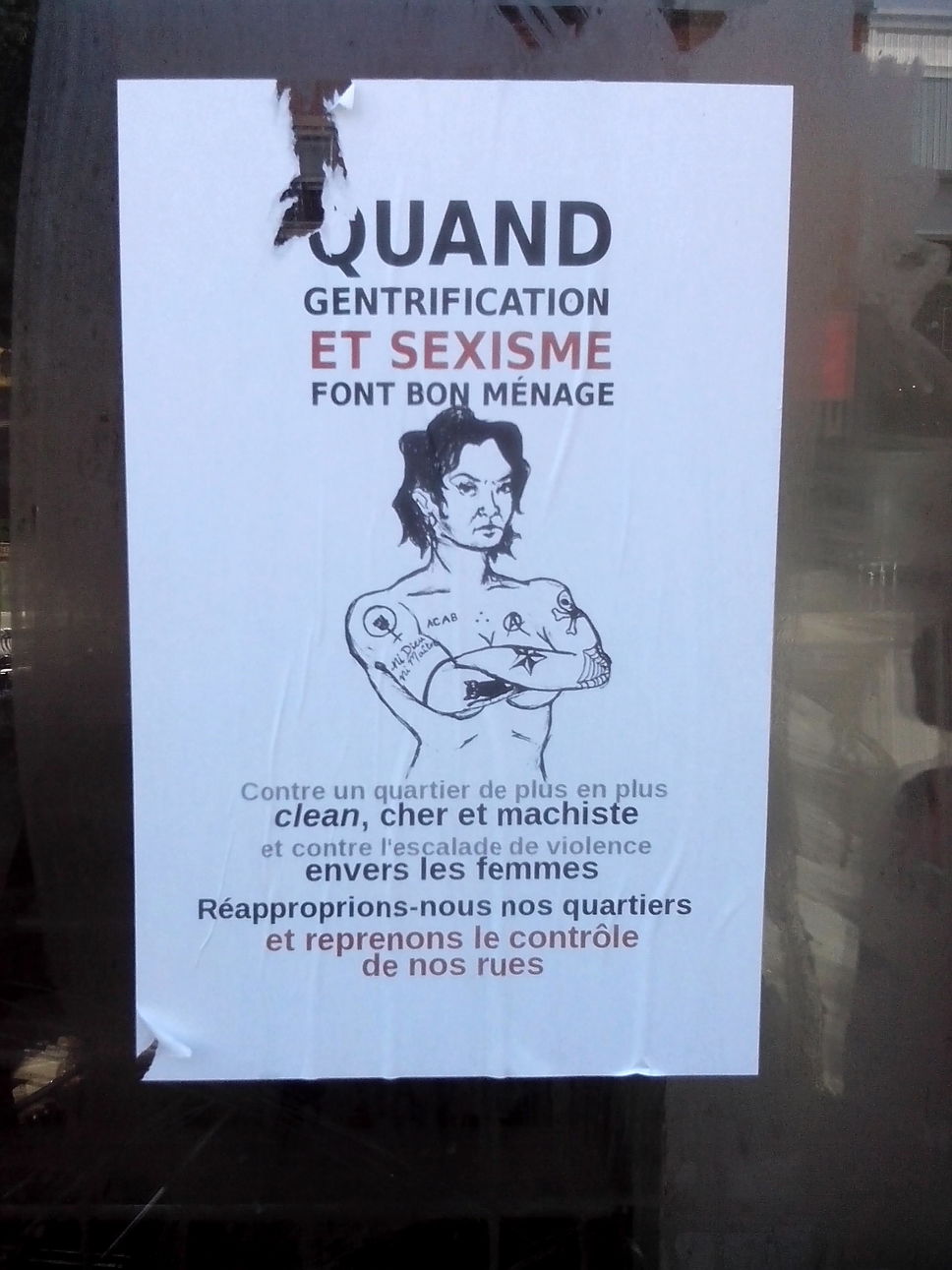
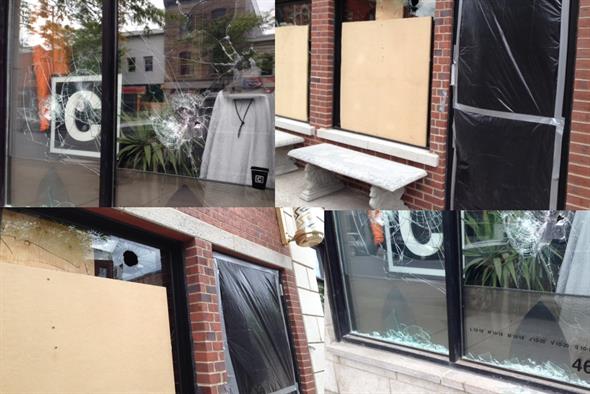
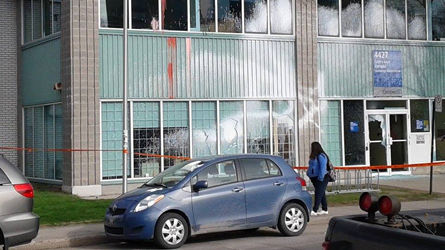
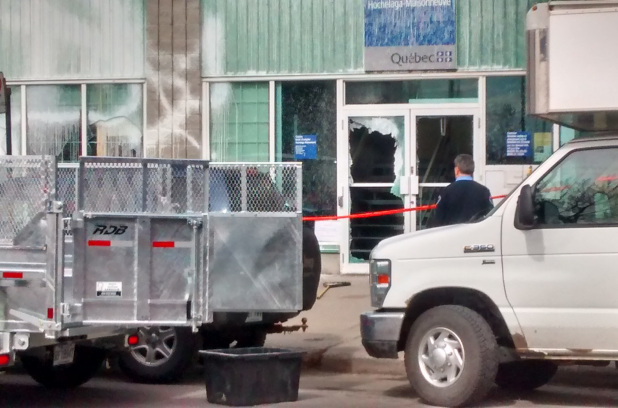
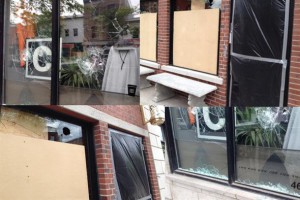
Business owners of Saint-Henri are tired of being victims of vandalism on the part of those who blame their luxurious shops for the gentrification of the neighborhood. They are now considering hiring a night guard.

“If you sell anything other than hot dogs at 25 cents in Saint-Henri, you are not always welcome,” says business owner Corey Shapiro. Every day, people spit on the windows of his hair salon and its luxury eyewear, both located on rue Notre Dame.

In December, two businesses in this sector, including Mr. Shapiro’s hair salon, were sprayed with white paint. An anarchist blog then claimed that stunt. Despite the intervention of the authorities, storekeepers who own more upscale boutiques in this popular area continue to be the target of vandalism and intimidation.

Scourge

The Journal spoke yesterday with four storekeepers of Notre Dame struggling with this problem.

Tony Campanelli is one of them. The businessman, who owns a café and a men’s clothing store, has become in spite of himself “a face of gentrification” in Saint-Henri, in transformation for two or three years.

Sprayed with oil

“They want to blame the gentrification of the neighborhood on me. It’s still not my fault that the condos are increasing and rents are rising, “says Campanelli.

Two weeks ago, oil was sprayed the front of his two businesses, which stained the stone facade.

“I’ll have to call a cleaning company to remove it all,” said the entrepreneur.

The contractor has installed cameras to pin these vandals he describes as “anti-capitalist”. Him and his neighbors are now considering to come together to pay a night guard.

“More than 50% of the local population lives below the low income threshold, said the mayor of the Sud-Ouest, Benoit Dorais. So yes, there are people who find the arrival of wealthier people difficult. ”

The Mayor strongly condemns these acts of vandalism, but believes that this phenomenon only affects a small number of storekeepers. “Overall, new businesses are welcomed,” he said.

Other acts of vandalism targeting the high-end businesses in Saint-Henri

  • Broken windows
  • Graffiti saying “No to the gentrification”
  • Spit on the windows
  • Excrement left by the door
  • Anticapitalist posters pasted on windows
  • A mixture of berries to replicate the entrails of an animal that had been left at the door
Mar 302015
 

From Printemps 2015

Revolt is stirring all across Quebec, and is spreading on a daily basis. 66 student associations have already voted a reconducible strike. Night demos are adding up. At the Vieux Montréal and the Université Laval, campuses are being taken hold of and transformed into political spaces. The UQAM was blocked today. While it took the 2012 Spring a few weeks to really get in gear, the 2015 Spring has taken off in the space of a few days. The movement begins at the point where 2012 had stopped. The strike is on the march.

Repression, too, has struck fast. Massive arrests have taken place, both in Montreal and Quebec city. Dogs have jumped at the most peaceful of demonstrators. A young student was even shot at point blank range by the cops. And the UQAM management is now threatening 9 militant students with political expulsion.

It is in this tense but invigorating context that the ASSÉ’s executive committee throws its cobblestone : a call for the end of the student strike, even as it is in full swing in universities, belying the many pessimistic forecasts. Here the ASSÉ executive committee’s voice should be understood as the reasonable and paternal voice calling us back to strategic evidence. The executive committee would seem to have its own agenda, its own ultimatums : a mega-demonstration on the 2nd of April, calling for a strike in the Fall that would act in tandem with a public sector workers’ strike, more particularly within the education sector. According to this « reasonable » voice, we would be lacking today the power to strike – without worker allies – and would therefore be facing the danger of a defeat with heavy consequences.

And yet, with this reasonable and paternalistic call, the ASSÉ executive has just undermined its legitimacy, as it puts into a question a strike that was adopted by over half of its member associations.

Ever since the birth of the 2015 Spring movement, this same executive committee has been hammering the same strategy in every general assembly and congress, reminding us every time that the strike would only be efficient in the Fall. And yet, these same assemblies have refused their watchword by initiating a strike on the 21st of March. So much so that it is now beyond any doubt that this same executive committee is not respecting the very minimal conditions that would allow it, today, to call for the end of the strike. Supreme irony : the ASSÉ used to repeatedly denounce the student federations (FEUQ-FECQ) when they made use of the mass media to influence their members’ votes. It is now dirtying its own hands in similar manoeuvers.

The 2015 Spring strike has been organized upon a framework other than the ASSÉ’s traditional structures. By calling for the end of the strike under the pretext of a strategic withdrawal, the executive is attempting again to muzzle a base that is increasingly evading its hold.

With every one of its manifestations, the contestation does not wear out its forces. The opposite is true : our strength feeds, and becomes contagious. Would we be speaking of a social strike in 2015 if there hadn’t been a strike in 2012 ? And yet, during the first weeks of 2015, nobody could have predicted the breadth of what occurred. A strike now does not rhyme with the impossibility of a later strike in the Fall. That is precisely what a « rampant spring » means : a movement that inscribes itself in duration, that takes different forms and knows many moments of effective power. What is most important is that in this movement allies may meet, tactics be invented and forces get organized. Instead, the ASSÉ executive cultivates a vision of forces that should be saved, as if we were single use little soldiers that should only be sent to fight at the right moment (and to the great trade unions’ advantage).

But to delve deeper, this blind trust in these trade unions’ mobilization is puzzling. These same unions that, in 2012, at the peak of the greatest social movement Quebec had ever known, never considered the strike. These same unions that are against any form of illegal strike, that supported the Charter and do not take positions against oil and gas production. What if the trade unions didn’t go into strike in the Fall of 2015, as their logic seems to indicate, what is ASSÉ’s plan then? Are we going to put our political destiny into the hands of trade union leaderships ?

The ASSÉ executives responsible for this « proposition » might answer that they too have never believed in the trade union leadership, but count on local union members to bypass the leaders in a movement against austerity. Still far from exhausting its own contradictions, the ASSÉ executive makes the same gesture as the great trade unions : out of fear of being bypassed by its fierce members, the executive calls them back to reason and order. Moreover, this focus on the public sector unions’ agenda puts aside all of those that the call for a social strike is trying to reach. Community organizations, the unemployed, workers of the private sector : so many forces ready to mobilize themselves and who are just as affected, if not more, by austerity measures.

In the current context, abandoning does not only mean putting an end to a movement hitherto unseen in terms of the radicalism of its demands and the autonomy of its forms, but most importantly means abandoning necessary struggles : what could come to the rescue of the nine comrades over whom hovers the threat of expulsion at UQAM, if not a combative movement that puts pressure on management so that it may drop its charges ? And what about those wounded by the police ? Who will spread their word, who will defend their dignity ?

Being overtaken by its base should always be good news for a union, rather than a threat to the strategic plan of a paternalistic leadership. We are betting on a social strike : that is a bet on the combativeness of the base, on people who are already now resisting the threats, the repression, and the well-paid trade union leadership. But more than anything, we are betting on the impetus that has already brought thousands of people to take the streets, many times in a single week.

This impetus is not strictly limited to the student strike. It will be prolonged into the 11th of April, at the demonstration against the Council of the Federation meeting on climate change, during the May 1st social strike, and then during the summer in local struggles against gas and oil production projects.

Mar 272015
 

From Contra-info

In the evening hours of March 24 2015, we slashed the tires of a McGill security division SUV and attacked the James Admin. building with flying chunks of concrete, vanishing quickly thereafter into the darkness of night.

We claim responsibility for this latest attack in retaliation to the University’s profiling, surveillance and harassment of students and activists affiliated with the group Demilitarize McGill.

Recently released internal documents reveal that as early as 2013, agents of the McGill security division were given orders to monitor, photograph and follow individuals present at Demilitarize McGill activities, including after they’ve left campus.

In honor and recognition of the fact that we share a common struggle against the same system and the same authoritarian social institutions, we took action to make it clear to our enemies that Demilitarize McGill is PROTECTED. Whether it’s disciplinary charges, another police intervention on campus or evidence of surveillance and harassment by the security division; we want the Administration to understand that any further acts of repression levelled against Demilitarize McGill will be met with instant retaliation at the hands of revolutionary campus guerrillas.

Solidarity isn’t just a cute slogan. For us, it’s a dangerous six-letter word spelled: “A-T-T-A-C-K”.

The University is at war; so are we.

Anti-Imperialist Action (AIA)

Mar 212015
 

From Contra-info

On Wednesday night, February 25th, we pulled the fire alarm in the Macdonald Engineering building of McGill university, disrupting the presentation of professor Andrew Higgins, a McGill weapons researcher, as a minimum gesture of sabotage and revolt against the University’s ongoing complicity in colonization and imperialist warfare.

This action was simple, required little planning and zero expertise, disrupted our enemies where it hurts and was infinitely more uplifting than any symbolic protest or SSMU general assembly we have witnessed in recent time. We believe that acts of resistance – both large and small – against those who profit from and those who facilitate the growth of the military-industrial-complex are valuable, and ought to be carried out whenever and wherever possible.

The University is at war; so are we.

Anti-Imperialist Action (AIA)

Feb 242015
 

From Fire to the Prisons

In February 2012, as the Occupy movement tapered off, a strike broke out against austerity measures in the Québécois higher education system. Prevented from occupying buildings as it had in 2005, the student movement shifted to a strategy of economic disruption: blockading businesses, interrupting conferences and tourist events, and spreading chaos in the streets. At its peak, the resulting unrest surpassed any protest movement in North America for a generation.

The following is an interview with Steve Duhamel aka “Waldo”. A frustrated exstudent, and Quebec-er.

FttP: What was the context for the massive upheavals, mobilizations, and riots that broke out in Montreal in 2012? What took place before these events that helped propel them forward?

Waldo: The original context was an always rising tension between students and the government around the tuition hike issue and a general conception of what public education should be. Kind of boring, but it gets better. We all knew about 2 years in advance that this tuition hike was planned, and in the previous years/months, there were different actions and demonstrations to warn the government that this one will not pass. This government, who had been in power for 9 years, didn’t care much about these protests and arrogantly decided to go forward. They knew that no “political” opposition (as in the official and classical politics) could defeat them, whatever they did, and that they had all the legitimacy to repress any form of “street politics” that wouldn’t recognize their authority.

To get a more general overview of the context, let’s say that what people call society was also becoming more polarized than ever, since both political parties running Québec have a neo-liberal rightwing program and have been alternatively doing some shitty reforms for the past 30 years in order to save their damned economic growth. While the opposition (PQ) was getting its popularity from being the defenders of the French-speakers against the Anglo-Saxon cultural hegemony, they kinda lost all of that slight legitimacy since they’ve been doing the same shit as the federalists from the governing PLQ. This mostly means that social movements progressively took a distance from the Québécois Party (PQ) which itself was born out of (the recuperation of) popular unrests in the 1960’s. This contributed for a long time to prevent any social upheaval, and helped justify a lot of what some folks call “class collaboration” between bosses and the poor. But now, the PQ has a hard time convincing the Québécois folks that the State can really work for them. The last time a tuition hike led to a general student strike was in 1996, while PQist Pauline Marois (the one that was elected in the aftermath of the 2012 movement) was minister of education. Who could believe in her when she came back to oppose Charest?

While PQ usually masks its agenda behind a thin social-democrat veneer, the very “liberal” PLQ openly shits on the poor and doesn’t bother with fake public consultations to sell the province to promoters, mining industries, fracking business, and so on. The Liberal Party of premier Charest came back to power in 2003, and as soon as 2005, a large student strike fought against its plan to cut a huge part of the student scholarship programs (that were set to be replaced by loans, i.e. always more debts). The 2005 strike was really inspiring in its forms of actions, and its spirit was still very present to a lot of the 2012 strikers (way more than what happened in California in 2009, for instance; to a smaller degree, some people were inspired by what was happening then in Chile). Upon entering the movement, large parts of the students already had a mistrust of the reformist federations and even of the more militant ones like ASSÉ. Many people also knew that the strength of the strike came from the uncontrollable multiplication of all kinds of economic and institutional disruptions. And not from the ultra-democratic idea of unity that would decide for any meaningful action and discourse of the movement. That leads to your second question.

FttP: What was the relationship between more insurrectionary anarchist/autonomous groups and the student federations?

Waldo: There wasn’t a single attitude amongst the anarchists in relation to the federations. Where all of them agreed to critique even the ASSÉ (the more militant federation that calls for free education and some kind of self-management) on its reformist demands, a lot of anarchists, even insurrectionary etc, thought it was cool that ASSÉ existed, or at least the CLASSE (which was a coalition of ASSÉ and different independent local unions) because it made it easier to organize a large scale mobilization, to create the event, that could afterward be overwhelmed. On one hand, some anarchists really think the direct-democracy model of the federation’s unionbased assemblies is valid and should only be carried further, that the problem is mostly the lack of consciousness or radical [perspective] of its members, and they think it’s all about radicalizing these spaces, criticizing their discourse on non-violence; a lot of these folks kind of wish there wasn’t a contradiction between the black bloc and the federations. Some others also dream of direct democracy but think we cannot hope anything from the federations except betrayal, and therefore we should build our own spaces and assemblies and organize/ coordinate outside of the “Rand-formula” type mandatory unions we’re stuck with.

Attempts to create such parallel assemblies mostly failed, in 2012, except for a small period between late May and June, when people had these big neighborhood assemblies born out of the massive potsand-pan marches against the “special law.” On the other hand, other anarchist tendencies don’t believe at all in the unions as the basis for the future anarchist society and all of these radical democratic mythologies. While some are more into a nihilistic perspective of the confrontation, against any form of schooling and any possible demands, others think it has never been a question of being for or against the unions, that we should just never believe in it, never think any kind of solution can come from there, or from school in general. It’s rather a question of how to deal with it, how to see the potentiality of it, beyond any moralism or radical purity; how can we compose with the federations, if they are to be there anyway. In any case, federations are to be considered as something alien, that we cannot identify with, but upon which we can intervene, we can meet, make use of, in a way or another.

FttP: Before large scale street demonstrations began, students occupied buildings. How did these actions pave the way for things to come? Were these initial occupations influenced by student occupations in the US or elsewhere?

Waldo: In fact, I wouldn’t say that 2012 was highlighted by any occupations, not being the street itself. Some actions involved blockades of schools or public buildings, disruption of financial centers and such, but from what I know, none of the actual schools in strike were really occupied. On the first day of the strike, people did take over the famous CEGEP du Vieux-Montréal (a pre-university college downtown) whose occupations were once considered the stronghold of the student movement in the previous student strikes. But this time, hundreds of fully-equipped robocops came right away to remind the youth that revolution was no picnic and kicked their asses out of there. About 45 people were jailed and legally banned from the protests for months. The others were dispersed with concussion grenades and pepper-spay. The college was then locked out for the next six months of the strike.

This doesn’t mean people didn’t want to occupy, or that it wasn’t part of our mythology, but the facts are that people didn’t even use many university spaces in the daytime to meet and organize. While in 2005 a lot of people would organize sleepins on different campuses, and cook tons of food to sustain the occupation and make it possible for people to stand together on the frontline, the 2012 strike mostly happened in the street, with people moving all the time, endlessly marching until burning themselves out— when they wouldn’t burn anything else. Yes, occupation of the street, but I would add: mobile occupation, in two different ways. 1.) There were very few attempts to take outdoor public space and keep it, and it was never aimed to last more than a couple hours (I heard about an “occupy” camp outside U.de M., but it didn’t work out). 2.) Outside of that, we could say that it really was the students themselves that were occupied, busy as they were with facebook and twitter and all that shit all the time. No doubt, the strike was really “occupied” by all these new “communication” devices, livestream and everything…

FttP: Anarchists and insurrectionary autonomists promoted their ideas through publications and saw many students join in their ranks during the yearly March 15th protests against police brutality. Can you talk about how insurrectionary antiauthoritian ideas were spread, and took on new currency during this time of struggle? For instance, anarchists and insurrectionists have talked a lot about how the use of masks spread through the long process of militants doing it during demos/riots, and also explained why they were doing it in conversations and flyers.

Waldo: I’d say that, as opposed to previous movements, this strike was amazingly rich with radical literature, specifically in the couple months leading to it, but then almost nothing consistent was really produced during the movement. It was as if every political tendency, anarchist circle or whatever (often born out of the 2005 movement), had their own publication ready before the strike in order to set things clear, to share what they had learned from the past struggles and go forward with a couple propositions.

Once the strike was launched, very few texts were circulating outside worthless opinions on the internet. Still, from what I recall, at one point (after a demo where some excited douche bags had beaten the shit out of a couple of black clad kids) we saw at least half a dozen different flyers criticizing the authoritarian pacifist ideology that undermined solidarity amongst demonstrators. As for the masks, more than any literature, I’d say it’s the practice itself of wearing them, and the cops practice of systematically filming protesters, that led to widespread use of masks. The same for the March 15th demo, I think it got bigger that year because of the context, where a lot of people were experiencing daily repression by angry cops and a guy lost an eye like 3 days before the demo. Even the mayor advertised for the demo on TV, telling people not to go!

FttP: What led to the student movement spilling out in the wider social terrain?

Waldo: To make it short, I’d say that first, there was already popular support of the students, that was made visible by the widespread use of the “red square” pin by millions of people and also by the 500,000 people marches like the one on March 26th, where the majority wasn’t even student, and showed the growing unpopularity of the Charest government. People literally had enough, and students were seen as the only sector of society that could massively mobilize, since all workplace unions and work laws make it almost impossible to build a real massive and coordinated union-based general strike.

A lot of people that weren’t students didn’t want to get too into the movement since they thought it wasn’t theirs, so they remained in a solidarity position, but what made a clear difference was the insolent and arrogant attitude of prime minister Charest, his constant provocations and specifically the declaration of a “special law,” in the night between the 17th and 18th of May, that made demonstrations illegal and added expensive fines for any acts of striking, blockading, occupation and so on. This law also locked out students from their schools until the end of summer to allow businesses to hire summer jobbers, and incidentally produce a demobilizing effect, since there was no more university to block. Maybe worst of all, the law came with the announcement of anticipated elections in the first week of September. The first weeks following the declaration of the dirty law saw an unprecedented social reaction: daily demonstrations in different towns and neighborhoods, with thousands of people defying the State; you would see your unknown neighbors smiling at you, chanting along the common motto: “The special law, we don’t give a damn!”

But then, after I’d say the week of the Grand Prix, (around June 10th), people slowly started to take a break, go on vacation to rest until, we all thought, the real war was to begin. The government forced schools to reopen around August 13th, starting with the CEGEPs, but even with all the motivation of the most determined strikers, a lot of assemblies finally and sadly voted with a slight majority against the continuation of the strike. Many students either got scared to lose their semester, and others thought it was pointless to remain on strike while there was going to be an election soon which meant there was no government to deal with yet. That fucked us real bad. A lot of leftists started to say we should spend our energies mobilizing for the elections, so that Charest would be kicked out. That was also a big reason why popular support got weaker; a lot of people thought we should vote and drop our bricks and stones.

Then, what we saw was no surprise. PQ got elected – with only a minority of the assembly – that silly Marois became premier and she did proclaim the abrogation of the special law and temporarily canceled the tuition hike. But that was just bullshit, it took a couple weeks before she said we would have to negotiate some kind of tuition hike sometime soon and she didn’t revoke all the municipal laws that were declared during the movement— e.g. making it criminal to wear masks and to march without permission from the cops. The most ridiculous part of this history is that Marois, who survived an assassination attempt by an Anglo redneck freak gone mad the night she got elected, didn’t politically survive the reactionary populist move she made the year after, aimed at imposing her “chart of values,” supposedly to protect the Québécois “secular” culture against foreign influences. So multi-culturalist PLQ came back to power less than a year and a half after the end of the strike that our funny syndicalist friends claimed was victorious!

FttP: During Occupy in the US, we largely saw that when the state attacked, the movement often quickly folded. Whereas in Montreal, we saw people go on the offensive. Was this because people found that they could win street battles? As in the famous scenes of people making the pigs turn tail and flee?

Waldo: Québécois or Montrealers aren’t more courageous, or even more anarchist than anywhere else. The end of the movement has proven that. Only, there is the specificity of the situation: an overly and counter-productively arrogant government in front of a massive and determined movement that leaves a lot of autonomy to its base, all of that in a relatively tight-knit society where anything echoes really fast. This might be an explanation as to why the Anglo campuses weren’t as mobilized, even if they were, more than ever before. People were pumped by Charest and the cops, who underestimated the determination of the students and their popular support (politics is often a gamble). This easily led to an escalation, were people saw they were strong and felt it was OK to kick a few cops asses.

FttP: Can you talk about how resistance to Plan Nord brought anarchist, student, and indigenous struggles together? Can you explain what Plan Nord is and why people were interested in destroying it?

Waldo: Plan Nord is just the name for a new phase of in-your-face colonization of the North-Eastern part of the continent, that is claimed by the colonial states of Québec and Canada. It’s hard to tell how seriously the average students marching against Charest took Plan Nord, or how many of those same students stormed the Plan Nord convention because of anti-colonial and ecologist convictions or whatever. Of course, there is an official sympathy amongst the movement toward these struggles, but I think the disruption of the congress and the riot that occurred was made possible because everybody knew it would make Charest angry, since Plan Nord was like his “little thing” he was so proud of, and that every decent person thinks it’s robbery. I still think that it’s in these kind of social upheavals that struggles that appear to be different show how much they are related, and impact one another. It’s still because of the strike they were involved in that many people got interested in native peoples’ struggles, and specifically in the fight against Plan Nord.

FttP: When the government outlawed protests of more than 50 people, the movement grew and more people joined. Community popular assemblies sprung up. Can you talk about these gatherings? How widespread were they?

Waldo: I’ve talked about that earlier, but let’s say theses assemblies were spontaneously created in at least a dozen neighborhoods of Montreal, and for about a month, they would meet around once a week, in a park or a community space, and, depending on the neighborhood, there were between 30 and 300 people. This number slowly went down as the summer came, and also, we must admit, as they got formalized and semi-institutionalized. What was interesting is how much different the organizational issue differed from one neighborhood to another. I mean, some were super obsessed with structures and sophisticated mechanisms that are supposed to help prevent domination and oppressive patterns in groups, others were more relaxed, but weren’t necessarily more effective, some would focus more on community issues while some remained in a position of solidarity with the student movement.

But yeah, too little too late, I suppose. I think it would have been really different if theses assemblies would have started earlier in the movement, and more than everything (and more realistically), if the strike had continued in September. It would have totally changed the quality of the movement. I mean, it could have opened a place where the union assemblies wouldn’t be the main space to discuss and organize the struggle, and it could have spread more easily to non-student issues and places. The elections really killed all these potentialities.

FttP: In an interview with Submedia, one anarchist participant talked about the use of projectiles in creating/defending space from the police, and the ability that physical attack gave people in expanding the conflictual nature of the strike. Can you speak to this?

Waldo: I don’t know what to say about that. Is it the expansion of the conflict that makes it possible to attack, or the opposite? Is it going both ways? The ability to attack didn’t always mean ability to get away with it. A lot of people got badly wounded with nothing much to show for it. There has been a lot of talking amongst anarchists in the last 15 years about “diversity of tactics,” but very few people thought about diversity of strategies, leaving this problem to union bosses, Leninists and social-democrats. And to the police, and the capitalists. Let’s say there is a confrontation. What is the space that we create, that we defend, while doing what we do? It’s not always quite clear. I’m totally not against all kinds of direct action, but I think sometimes there is a dangerous belief that direct action is good in itself, while it can often make us weaker. Black bloc was once a tactic, nowadays it often looks like an ideology, an identity. We should never denounce comrades who engage in this type of action and we should be ready, as much as we can, to protect them against cops and violent pacifists, but I think “attacking” can never become a strategy in itself; can never replace the need for a strategy. This said, the question should never be whether we attack or not, but rather how do we do it, when and where. What makes it possible to attack in a way that gives us more strength instead of isolating us? These are serious questions.

We should not neglect the anxiety that direct actions create amongst the activists themselves and their friends, when it’s done without thinking, because it’s seen as the radical good. It’s not just attacking that makes people able and willing to attack, that expands the conflictuality of a movement, it’s the strength that we build through all kinds of links, shared experiences, shared spaces and materials, tools and stories, and languages, shared love and thrust, etc. All kinds of things also come into play when it’s time to fight, which constitutes our strength, and that we cannot put at risk for a matter of purity or for a romantic belief in the power of action. An action is not good because it’s against the right enemy nor because it has good intentions: it’s only good when it makes us stronger. To the moralism of pathological pacifists, we should not impose another kind of moralism.

FttP: What does the future hold for those in Montreal? Will we see continued unrest at the universities and beyond?

Waldo: Everything is possible. The tuition hike is showing up again and the federations are already mobilized. The experience of 2012 is still fresh and a lot of people don’t want to lose what has been learned and built. The repressive machine is better prepared, and more determined than ever, it’s hard to say if people are too. There is already some organizing being done outside the unions, and the electoral threat should not be part of the play this time. It’s hard to tell if there will be as much popular support, but there are apparently more chances that we will see different unions from the public sector go on strike in the next months (even the cops are currently protesting against the Québec government). I still think we should not hope for anything and just do what we have to do. Things always happen anyway, it’s just a matter of staying ready.

More on the 2012 Student Strike:
www.crimethinc.com/texts/recent features/montreal1.php
In French:
faire-greve.blogspot.ca