Montréal Contre-information

Paint bombs: light bulbs filled with paint

 Comments Off on Paint bombs: light bulbs filled with paint  Tagged with:
Jul 192012
 

From Blockade, Occupy, Strike Back

First, put on your cloth gloves. This will keep your fingertips (and the paint bombs) clean. You should work on a soft surface (like a fold towel) to protect your bulb.

1. First, use needle-nose pliers to cut off the metal fitting. You can either cut two vertical slits in the fitting and wiggle it off, or simply cut around the entire thing.

2. Next, remove the glass tube and filament from inside the bulb. If they haven’t already broken in the process of cutting off the fitting, try gently poking them from the bottom with a screwdriver.

3. Fill the bulb with paint (use a funnel or dish soap bottle and add some water if the paint is thick), seal the hole with paper, clay or similar, and seal with electrical tape or melted wax. Mixing indoor and outdoor paint makes it much more difficult to remove.

4. Wipe down the bulb with rubbing alcohol to remove any prints.

Street Demonstration Tips

 Comments Off on Street Demonstration Tips  Tagged with:
Jul 192012
 

From Blockade, Occupy, Strike Back

While people can participate in demos with their crew, sometimes it makes sense for crews to act together in a contingent or a bloc. The form chosen should fit the context. Here is a collection of tips for acting within demos – some are applicable more broadly, others are more specific to a bloc.

The way a demo moves can determine its outcome. While there are situations where moving quickly can be strategic, running blindly in a panic is the worst thing people can do. The police often attempt to disperse rowdy demos, and being able to hold our ground, not panic, and fight back is crucial.

A snake march—weaving up and down different streets and changing direction often and unpredictably (but strategically) – is a good way for spontaneous demos to evade police. Marching against traffic on one-way streets makes it difficult for the police to control the march.

It is important to pay attention to what’s happening around you. Stay aware of your surroundings. Notice any police lines that are being reinforced. Kettling is another tactic police use in mass arrests wherein they try to surround a demo from all sides, either in a street between intersections, or inside an intersection. This is why, if the demo is large enough, it should always try to hold two intersections at a time to leave an alternate route open.

Structures for quick communication need to be developed. People can spread messages and plans quickly by going from crew to crew.

Never take photos of anything that can be incriminating. If putting media online, black out faces – police routinely use footage posted online as evidence. Placards, banners, and paint can be used to block unfriendly cameras.

Don’t come to a demo as a passive observer, hoping others have a plan. Come prepared to participate actively and have your own goals and plans.

The purpose of the bloc as a tactic is to have everyone look as similar as possible, so that no single individual can be identified within the anonymous mass. Blocs are not necessary for acting in the street – people can also self-organize into contingents, or act as individuals – but they can help to keep everybody safer. If only some people within a bloc take these precautions, the cops can more easily spot and target individuals and groups, which is dangerous both for those who are acting within the bloc and for those who are not. Those who make the effort to stay anonymous can draw extra police attention; those who don’t can be more easily identified, which can make them easier targets. Neither of these situations is desirable.

If you’re going to wear a mask, keep it on at all appropriate times. If you are captured on camera or witnessed at any point with your mask off, you can thereafter be easily identified with it on. Don’t just cover your face. Bandanas are popular and convenient, but they don’t conceal enough. Cover your head completely so your hair cannot be seen – especially if it’s distinctive. In a bloc, you can do this by wearing a ski mask or making a mask out of a t-shirt – stretch the neck hole across your eyes and tie the sleeves behind your head, with the rest of the shirt covering your head and shoulders.

Be extremely conscientious about where and when you change into and out of your mask and other anonymizing clothing; there should be no cameras or hostile witnesses. If possible, explore the area in advance to find appropriate spaces for changing. Remember that police are especially likely to target masked individuals who are not in a crowd that is similarly dressed.

Wear different outfits layered one upon the other. Ideally, you should have one outfit for getting to the site of the action without attracting attention, your anonymous gear for the action itself, and then another outfit underneath so you can look like a good citizen as you exit the area.

Do not march in a bloc wearing your regular clothing, especially if it’s distinctive. Cops may be stupid, but they can probably match the pictures of the masked-up person with the purple polka-dotted pants to pictures of the same person in the same outfit minus the mask – even if the pictures were taken on different days.

Backpacks and shoes are also used to identify people from demos. Rather than using the same ones you wear in everyday life, use different ones. Consider covering shoes with large socks if appropriate.

Cover or remove anything that can identify you: patches, piercings, and tattoos.

If possible, cover your eyes with goggles to protect from pepper spray or tear gas. If you wear glasses, wear non-descript ones. Contact lenses are not recommended in situations where you may come into contact with chemical weapons. If in winter your glasses fog up with a mask, you can wear contacts but have goggles on hand.

Be careful not to leave fingerprints. Wear cloth gloves—leather and latex can retain fingerprints and even pass them on to objects you touch. Wipe down tools and other items with rubbing alcohol in advance to clean fingerprints off them – you never know what might get lost in the chaos.

Banners along the sides and front of a bloc can function to obscure surveillance, and can also help to protect people from being snatched by police.

Placards and flags made with heavy wood can be used for self-defense in a pinch (and are longer than batons!). Barricades, fireworks, paint bombs, fire extinguishers, rocks, and other creative means can keep enemies at a distance.

Knowing the terrain can be invaluable.
• where are there barricade materials, action targets, and stash spots for tools to be picked up during the demo?
• where are there alleys, backyards, hiding spots, crowded areas, cameras, and public transit locations for dispersal?

Do not let any of this give you a false sense of security. Be careful. Assess your relationship to risk honestly. Make sure you know and trust the people you’re working with, especially when it comes to high-risk activities. Practice security awareness at all times. Know and assert your legal rights when dealing with police. Doing so may not make things better, but failing to do so will certainly make them worse.

The Formation of Crews: A Tactic in Expanding Our Strength and Autonomy

 Comments Off on The Formation of Crews: A Tactic in Expanding Our Strength and Autonomy  Tagged with:
Jul 192012
 

From Blockade, Occupy, Strike Back

Instead of hoping for a bureaucratic organization to do something for us, we can take our lives into our own hands by self-organizing. The formation of a crew is a step in this direction. A crew is a collection of close friends that trusts one another enough to organize together. This means having shared intentions, ideas, and practices, having each other’s backs, and never talking to police. In other words, this means sharing affinity. Some people refer to crews as affinity groups. While who is in your crew can be somewhat flexible depending on what you’re trying to do, it does imply having people with whom to consistently participate in social struggles and develop a more long-term term strategy. It often involves sharing your day-to-day life and knowing people well. This means knowing what is shared, but even more importantly, knowing where real political differences exist.

A crew is a small group of people who organize without hierarchy – there are no leaders or followers, and everyone chooses how to take part in the activity. Crews can form anywhere: in school, on the street, and on the job. This is an effective way of organizing because, in a small group, you are making decisions and setting goals with people that you already share affinity with, without needing to vote or use formal processes. Doing so sidesteps the alienation and stagnation that happens as a result of the bureaucratization of the student movement – however, self-organization requires a lot more initiative and creativity, since nobody will put your ideas into action for you. Another benefit is that the decentralization of action planning renders repression of social movements more difficult.

Larger endeavors that are beyond the organizational capacity of a given crew, such as occupations or demonstrations, may require assemblies or other means to coordinate with others. This larger coordination structure based on autonomy stands in contrast to the standard idea of general assemblies, which require voting or consensus, whose ultimate function is to control and limit the struggle.

As people realize their own power as individuals and communities, the power of those in authority (i.e. the administration, the politicians, the police, and the bosses) weakens. This is what happens in any community garden, any occupation, and any riot. Individuals see that they can grow their own food and help others do the same; they see what they can do with just a few others. They see that they can take and hold space, and make entirely new ways of interacting together possible, while fighting off the institutions that stand in their way. When space is liberated, when we fight authority, we see that capitalism is not absolute. We realize that most of the things around us that we value are of our own creation. Contrary to the widespread myths, authority is in fact unnecessary and harmful.

When more people realize their actual capacity to determine their own lives, they, along with others, become a material force. One of a physical nature, unlike the voting polls that only act as a means to confuse where our true power lies – in our own hands. Those who wish to play puppet master know this. The people who fancy themselves our rulers and keepers – politicians, bosses, police, judges, and many others – long ago organized themselves into a force that can in actuality change things, move things, and control things. Crews act as a counterforce to those whose goal is to profit by dominating us.

Crews, then, serve a role in protecting ourselves from those who would like to exploit us for the sake of the economy, from those who would like us to continue working for scraps and piling up huge debts. Crews can come to demonstrations prepared and with clearly formulated ideas and plans about what they want to see happen, opening up interesting possibilities in otherwise ritualized processions from point A to point B. Crews can organize to disrupt the functioning of the economy, both on campus and off, through blockades, sabotage, occupations, and other forms of action. Crews can get together and articulate their ideas on the walls of the campuses and city streets with graffiti and posters. They can make sure that advertisements never stay up for long, and that police stations, banks, and gentrifying apartments or restaurants are never safe. Crews can steal from big businesses, such as by expropriating groceries to pass out for free in their neighbourhoods. They can take money from capitalism and give it to social projects autonomous from the state, or initiate those projects themselves. Crews form to act as a force against those who would rather see us subservient or behind bars.

Crews can form to approach the police when they are hassling someone on the street or in the métro. They can attack the immigration machine that deports and imprisons. They can stop the landlord trying to evict their neighbours. They can de-arrest someone at a demonstration without hesitation, even if they don’t know them. They can smash banks and other spaces which exist to reproduce capitalism. They can build up their communities through solidarity, so that the police hesitate before following someone into a neighbourhood or a campus.

On campus, crews can extend the reach of the strike. Open up the universities as social spaces for students and non-students alike to come in and use freely. Appropriate the copy machines and spread news of the revolt to other sectors of society. Take over the cafeterias and bars and begin preparing the communal feast. Burn the debt records. In short, create not an ‘alternative’ that can easily be accommodated within capitalist society, but rather liberated space in which power is built to destroy capitalist society.

The point of acting is to gain control over our lives and to further our own power, as well as the power of those who have always been dispossessed in this society.

Crews strike back.

Jul 032012
 

we receive and publish

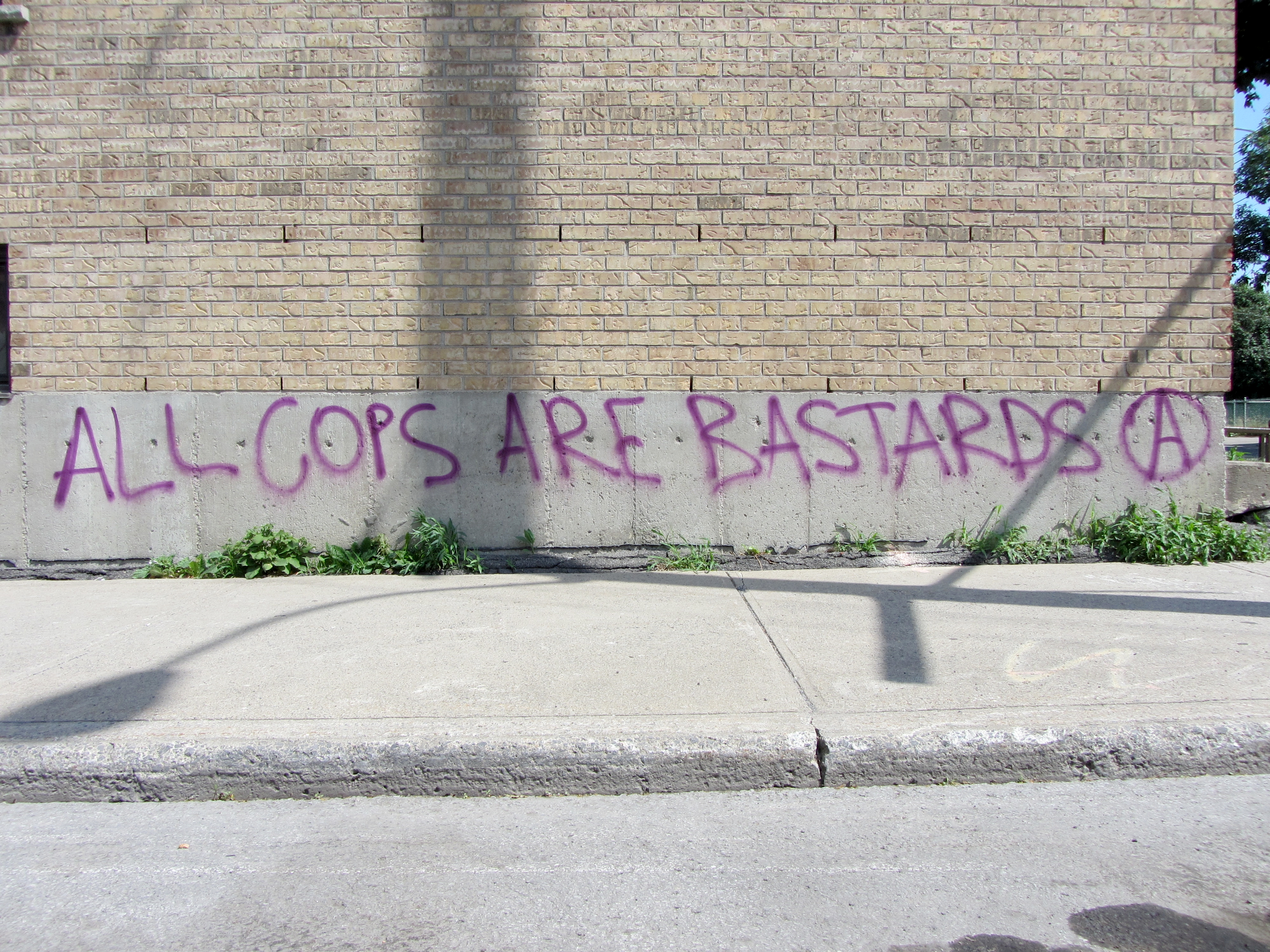
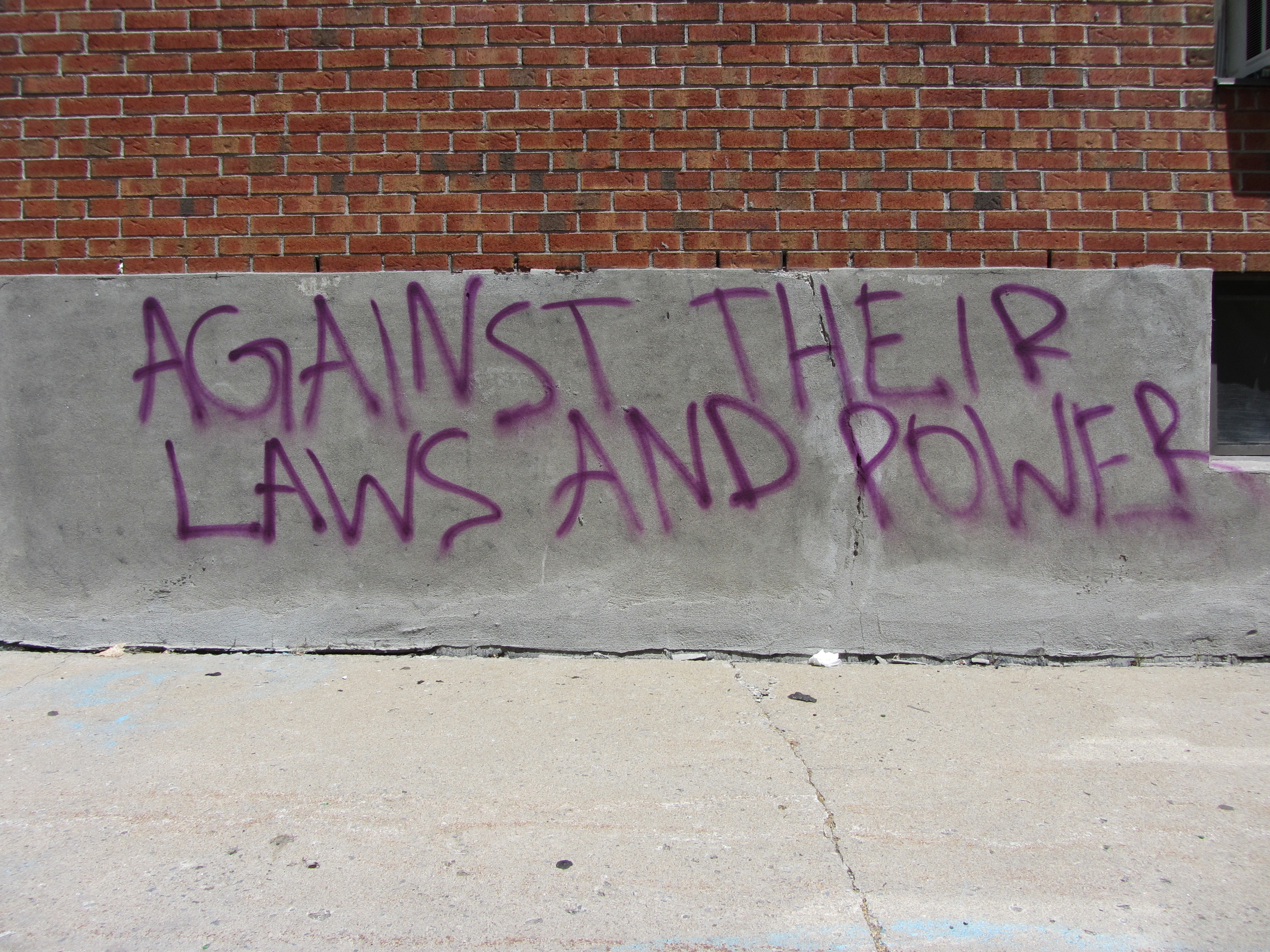
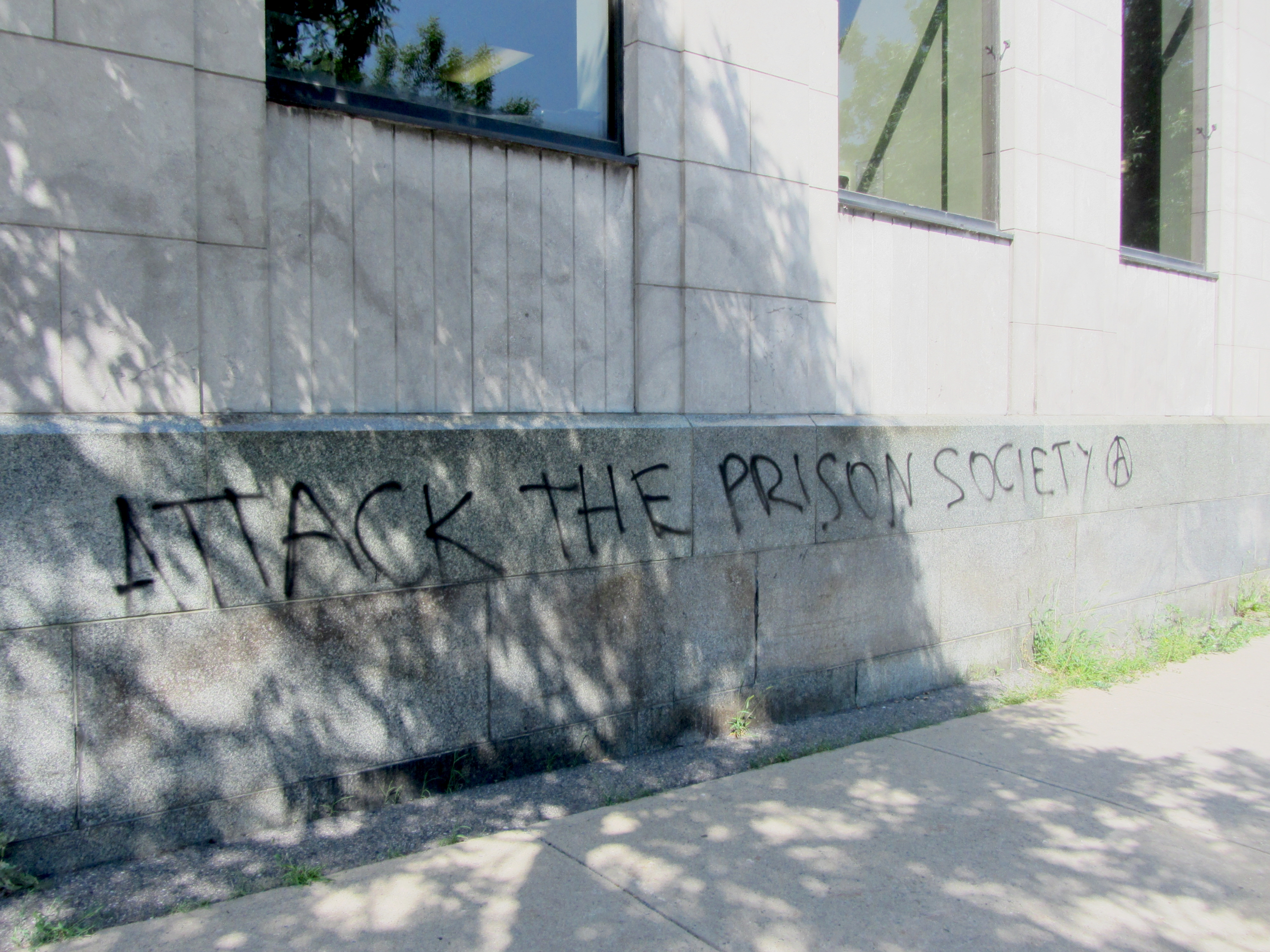
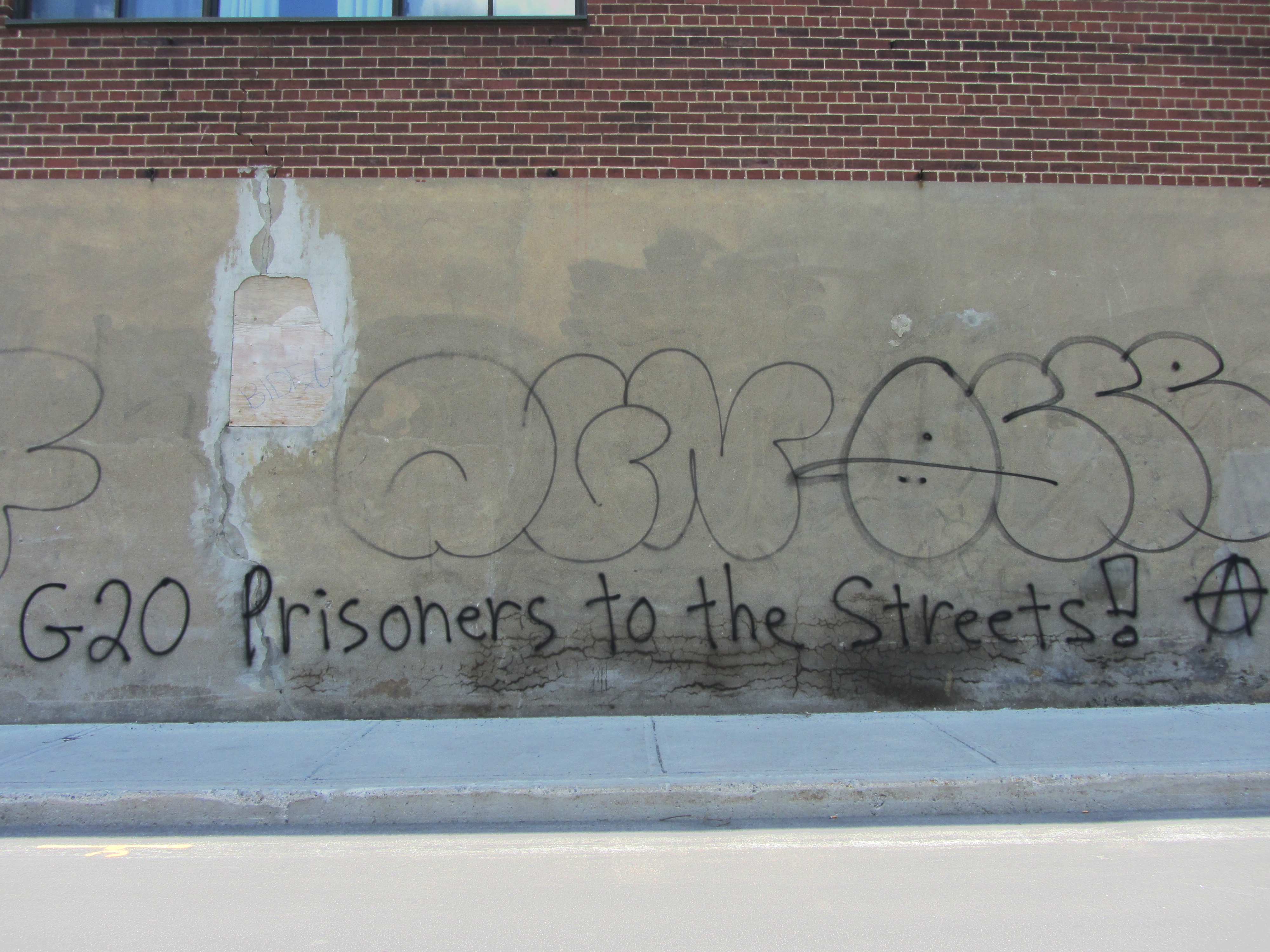
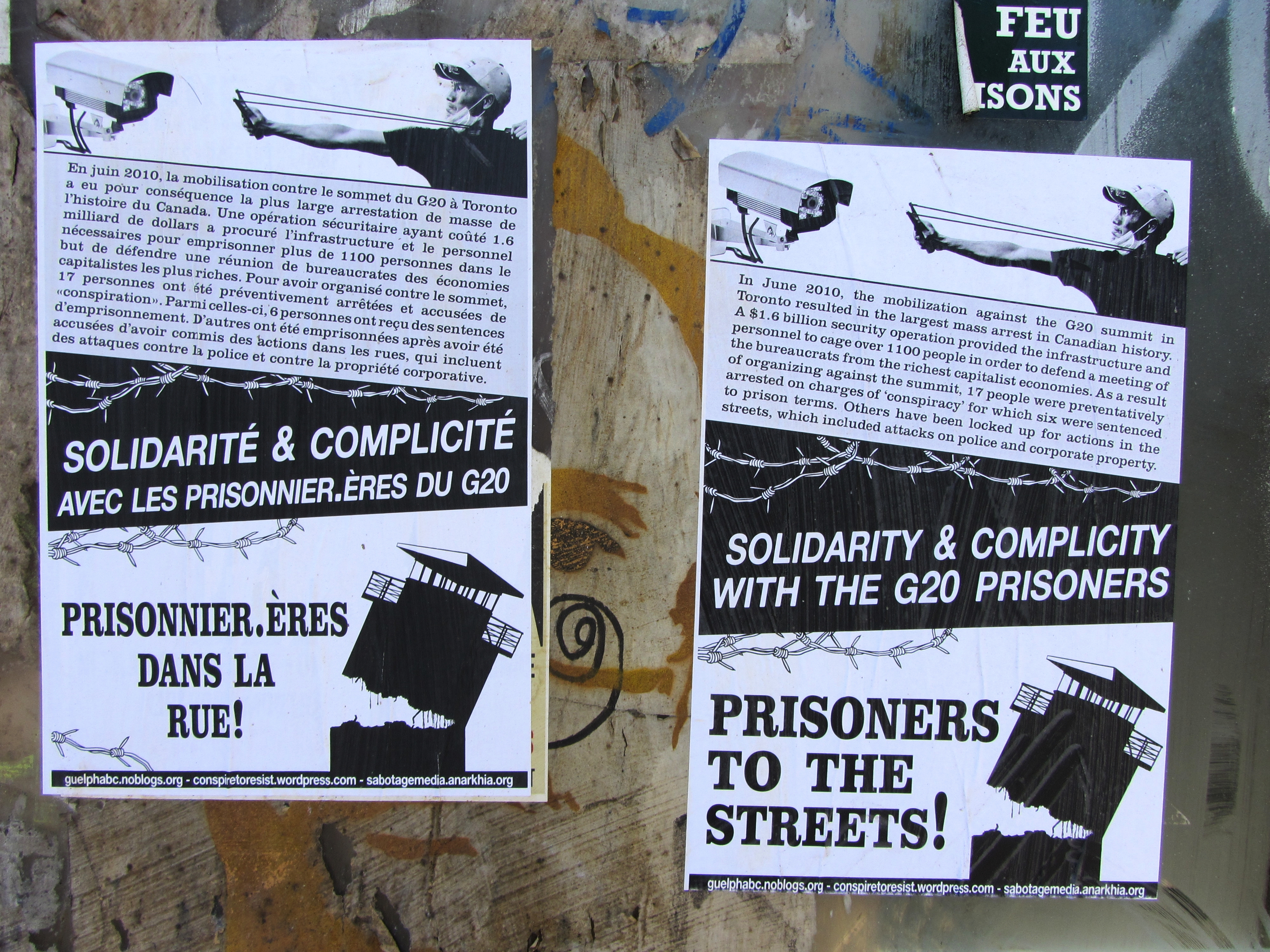
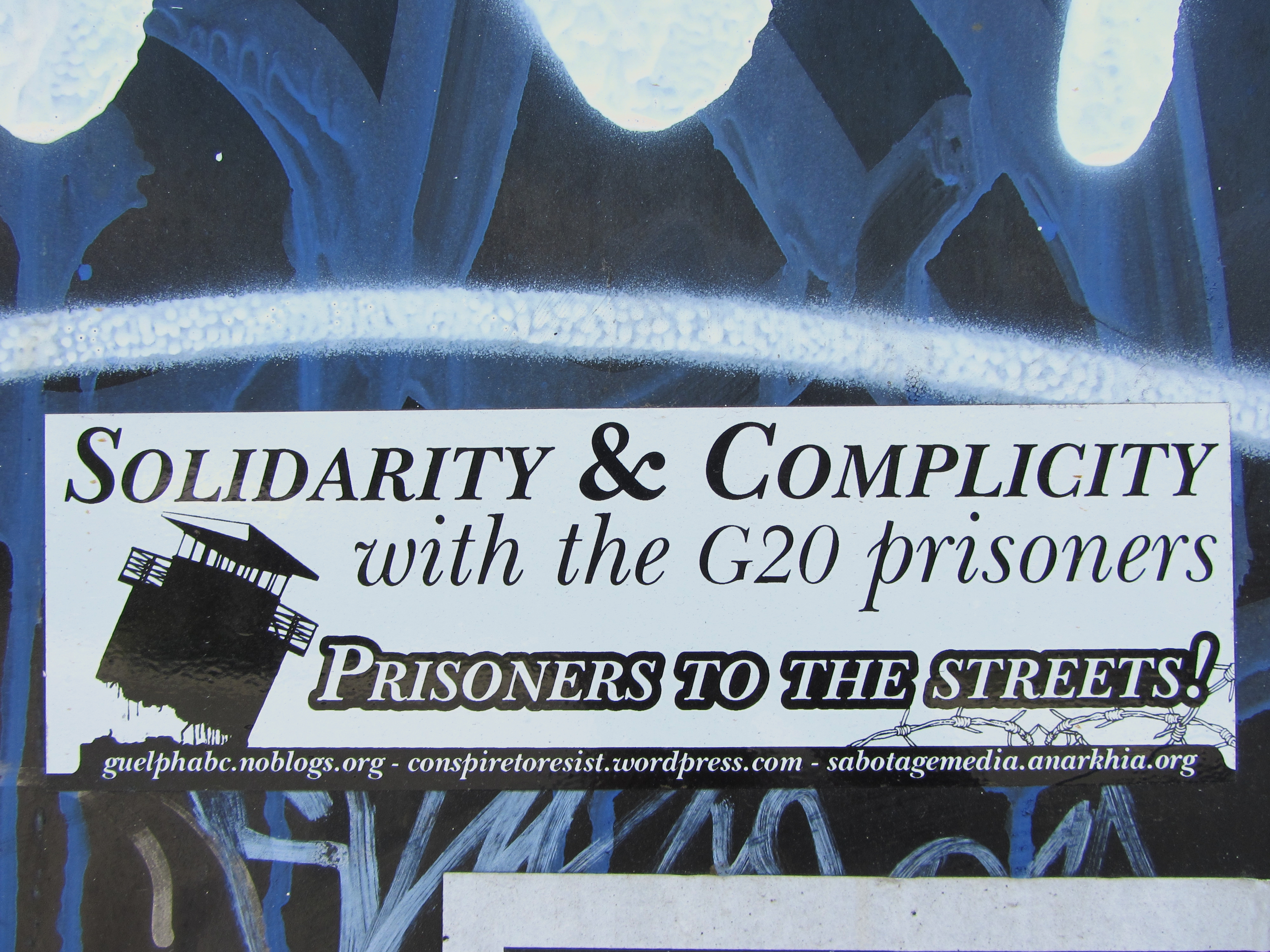
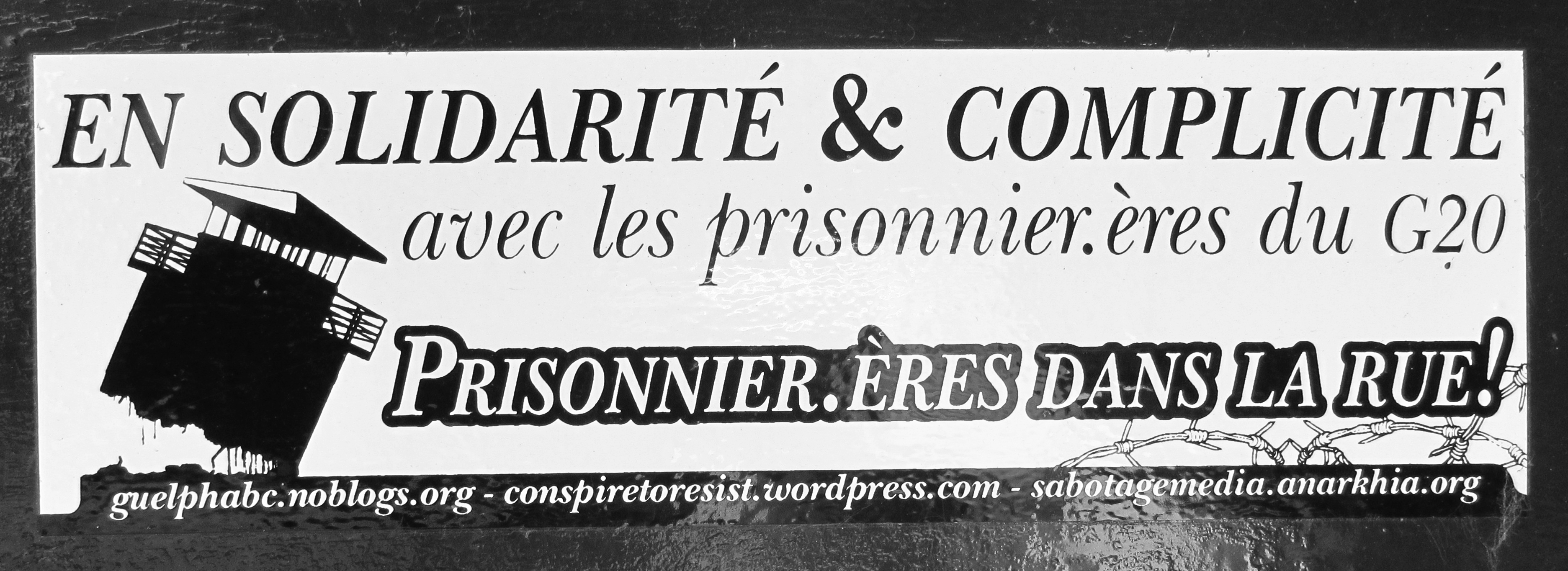
The month of June, 2012 marks two years since the G20 summit in Toronto and the courageous resistance shown to it. It also marks the sentencing of our comrade Charles Bicari to seven months behind bars for smashing the windows of two police cars, two stores and an ATM with a hammer. To mark the occasion, we spent a few evenings spreading anti-system and solidarity slogans with the G20 prisoners in the streets of Montreal.

Continued solidarity with the G20 prisoners!

No comrades left in the enemy’s prisons without a response!

Here are some pics:

Jul 012012
 

June, 2012

A major railorad was sabotaged during the evening of Wednesday June 13th, in a farming area near Farnham, Quebec, in response to the call by the CLASSE for a day of nation-wide actions against the Montreal Conference of the International Economic Forum of the Americas.

The train signals system was turned on by sabotaging the electric box that controls the signals near an intersection, which eventually prompted the train traffic to be suspended for a moment. This location was carefully picked up, not only for the easy task it was, but above that for the crucial nature of the merchandise it transports, including a lot of filthy oil coming from the tar sands in the West, before this sole railway divides into different destinations such as Sherbrooke city, Bromont’s techno-park (which hosts some of the biggest names in the high-tech industry, including the infamous IBM) and further down on to New England.

This was just a beginning. There are many more fluxes that are crucial to the functionning of this system of oppression and its Holy Merchandise, and we are committed to do it again, and strike targets that will always hurt them more. Given our indefinite number (that ain’t an « invisible committee » for nothing), it is strongly recommended that each and every striker or supporter gets her/his hands dirty, alone or into groups, because we do not believe that these feel-good demosntrations will be enough to make Power change his mind. And the proof is in plain view… months of strikes, and even with our many fine hits and great achievements, especially in the face of the judicial/police despotism, the government still won’t give a damn about our most basic demands, and the cops are now clamping down on mainstream dissenters like they’d do with dangerous criminals. We are under a dictatorship, because liberty is now being considered a high crime.

To let this train ride -this very train that allows them to profit from the devastating exploitation- is to collaborate in silence. We say: « ENOUGH WITH THIS SHIT! » This can’t go on like this. The techno-industrial society, because it intoxicates the living and destroys conditions of life, must be FORCED to a stop, or else it’ll soon be forcing us into mass graves! Fukushima was only the first sign of this ongoing catastrophy.

So we will make sure that the capitalists are paying for their abuse. Maybe the bill wasn’t very heavy, but we all can add our two cents!

Sabotage isn’t some vanguardist tactic or some childish vandalism, neither it is a provocation on the part of « smashers from outside of the movement » just as the filthy cops dare to spit in our ears (but who’s still stupid enough to even listen to them?). It has long been a completely rational and legit course of action, that empowered ALL of the strikes that changed history. In the face of a machine that’ll never discuss anything and always enforces its conditions through dictates, sabotage is one of the means to communicate revolt by putting it in relation with a wider uprising, and by imposing our own conditions to the crooks in power; that they walk along with these, or die along with their system!

This small gesture of resistance to the one-way train of industrial capitalism that has now become completely out of control was committed in solidarity with all the arrestees before and during this Grand Prix weekend (where the police has put their lives on the line for Bernie Ecclestone, notorious wealthy fascist) especially with Mathieu Girard, brutally arrested and detained during the funeral of his sister (our condoleances, comrade) and Andrea Pilote, arrested on the highway in strangely the same manner they shot the legendary Jacques Mesrine. Even if we do not know them, our hearts burn with blazing solidarity for these two comrades who fell victims of police violence. We also feel as much solidarity towards the Informal Anarchist Federation (FAI) folks in Europe and South America, and for the native people around the planet who still are struggling for their land.

– Invisible Committee for the End of Their History

Jul 012012
 

January, 2012

On Friday, January 6, 2012 the Montreal police killed Farshad Mohammadi – a homeless man and Kurdish political refugee – in the metro.

This killing is horrific, but not surprising. The police as an institution exist to maintain power and enforce a social peace necessary to keep capitalism in motion. To this end, they consistently suppress those who don’t, can’t, or choose not to fit into this system.

As one of many attempts to respond to this killing, a few of us put up hundreds of posters inside the metro trains with an anti-police analysis while trying to engage with bystanders about the reasons for the action. “Porcs-Flics-Assassins” and “Cops-Pigs-Murderers” were also painted onto the walls of the platform at Peel metro.

Jul 012012
 

December, 2011

Two banners were hung in Montréal in solidarity with the G20 prisoners. Solidarity with the G20 prisoners / Tear Down the Prison Walls was hung from a building on St. Catherine street downtown. Solidarité avec les Incarcéré(e)s du G20 / Propageons la Révolte (Solidarity with the G20 Prisoners / Spread Revolt) was hung in the St. Henri neighborhood. Flyers were scattered at both sites, and further distributed in the metro system and on the street in the following days. We hope this counter-information action brings a smile to our locked up comrades.

Text from the flyer

Sep 232010
 

July, 2011

Cops-Pigs-Murderers
No State ‘Justice’
Rage is our best weapon.

NEVER FORGIVE, NEVER FORGET

In Montreal, a banner against police was dropped from a highway above rue Atwater in the early morning. Two thousand fliers were thrown and the banner stayed up for over 30 hours on a main artery into downtown. We did this over a month after pigs murdered Mario Hamel and Patrick Limoges on June 7, which was followed by a small riot on the night of June 8 targeting police and the world of capital and domination that they defend.