Comments Off on Between Storms: Anarchist Reflections of Solidarity with Wet’suwet’en Resistance
Oct232022
Anonymous submission to MTL Counter-info
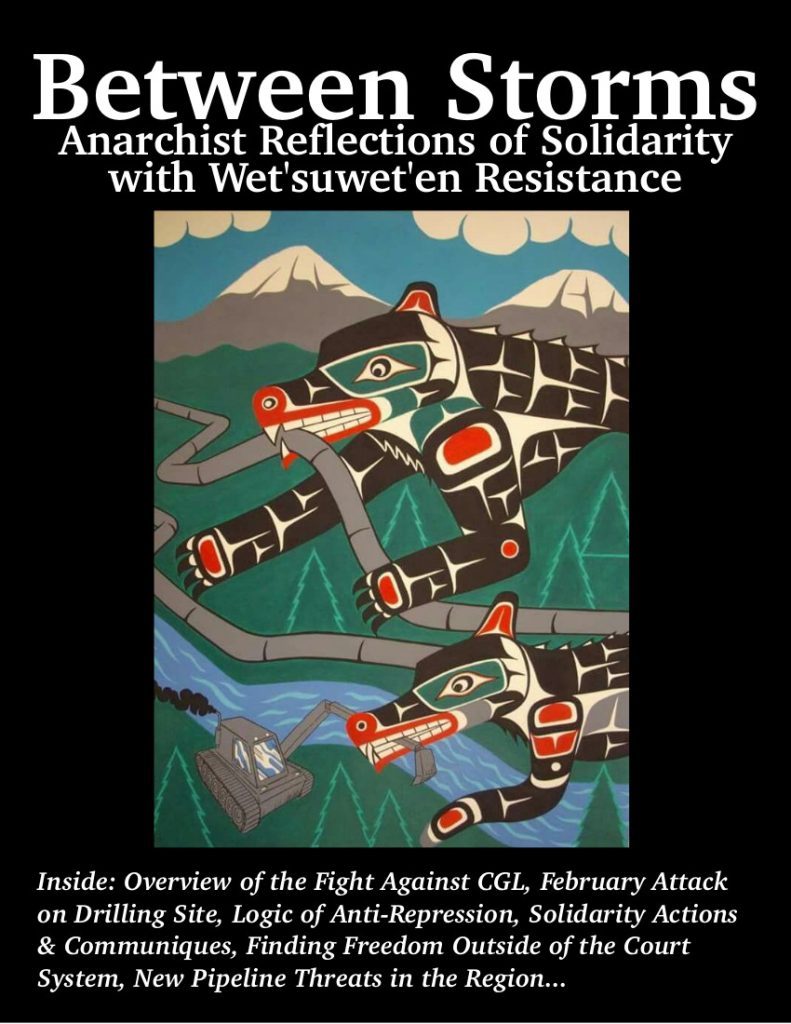
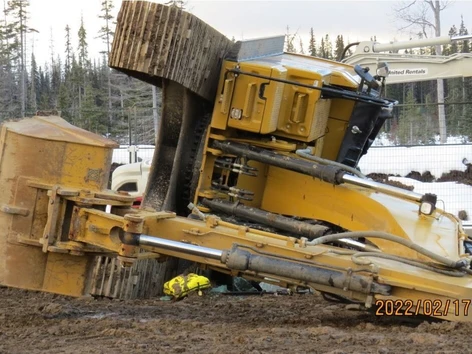
We have assembled this publication in solidarity with the ongoing Wet’suwet’en resistance to industrial expansion. This struggle for Indigenous self determination and land defence has become a landmark moment of rupture across the colonial nation of Canada and beyond. We felt the need to compile this zine in an effort to take a step back and witness the breadth and fierceness of these last few years – with a particular focus on the year that has just passed since the start of ‘Coyote Camp’ and the specific battle against the attempt to drill under Wedzin Kwa. Not to produce some stale collection for the history shelves, but to inspire and learn from these events as they continue to unfold. As we go to print, CGL has just begun the drilling under the river that many have fought so hard to prevent. It’s a sad day and this part of their destruction will have devastating effects. But this doesn’t mean that this fight has been in vain, the project is not complete and opportunities for intervention abound.
Inside you will find an overview of Wet’suwet’en resistance from the emergence of Unistot’en Camp until the most recent endeavors on the Gidumt’en yintah, as well as the closely related Lihkts’amisyu actions and Gitxsan rail blockades nearby. We’ve included a centerfold map outlining the widespread scope of coast to coast solidarity actions from fall 2021 to summer 2022, along with communiques found online that offer reflections and analysis from people behind some of these actions. The topic of antirepression and overturning the state’s attempts to isolate and criminalize us is also explored. A Well Oiled Trap introduces the history of the British common law, tracing it as foundational to the Canadian state, its justice system and colonial projects, outlining their incompatibility with our dreams. Lastly, we address another antipipeline fight brewing up in Gitxsan territory (Wet’suwet’ens neighbors and ancient allies); An analysis of the proposed related projects is presented in the article Face to Face with the Enemy: An Introduction to WCCGT line, PRGT line and Ksi Lisims LNG Terminal.
This publication is intended to be printed on 11×17 size paper, if printed using normal paper size its likely to become difficult to read.
Comments Off on map.negate.ca: An Interactive Map of Extractive Infrastructure in BC
Oct032022
Anonymous submission to MTL Counter-info
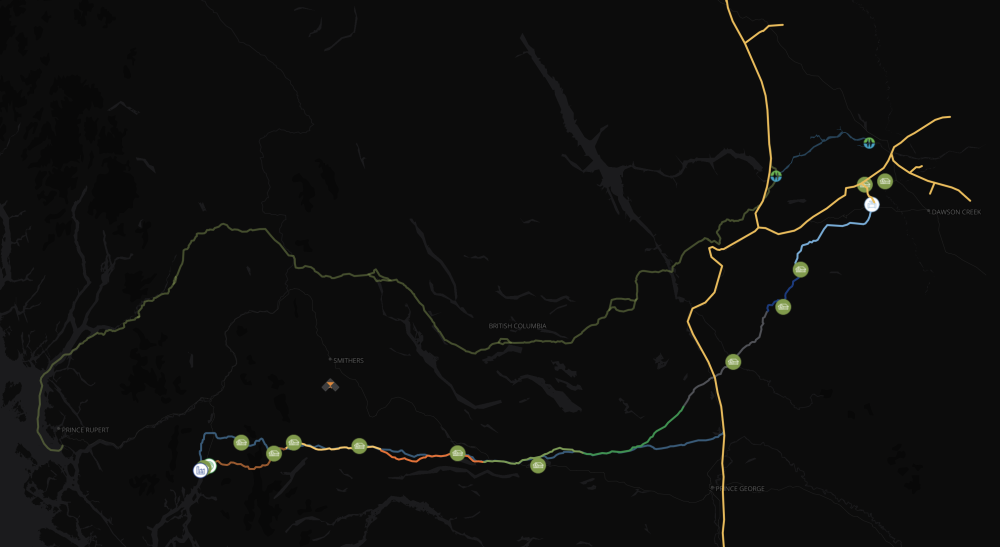
There is a ever growing amount of pipelines and other extractive projects within so-called “british columbia”. It is challenging to understand the scope of this infrastructure and how each project relates to others.
We collected information about planned, in construction, and completed projects and combined them into one map. We also include all freight rail lines.
We publish this map to gain collective perspective on the state of extractive industry in bc. We will continue adding new data as it emerges. If there are any projects that you want added you can email map@negate.ca.
The map is entirely hosted on our server. Your browser won’t connect to google or open street map. If it is slow, this is probably why :-)
https://bccounterinfo.org is now live! We at BC counter-info have gone to great lengths to create a secure and accessible platform for anarchist and anti-authoritarians of all stripes to upload their stories of inspirational revolutionary actions happening across so called ‘BC’ and eventually to help broadcast others from around the world. We encourage all ‘BC’ comrades to submit their handiwork using the portal provided in the submit section of the website, after reading the security tips provided. If you have any suggestions on ways to improve the site, especially around security, or to tell us how much we suck, don’t hesitate to email us at bccounterinfo@riseup.net or alternatively you can use the submission portal for one-way secure messages. If you have submissions that fall outside the area known as ‘BC’ please submit to existing sites, and we will share them automatically in a separate feed. Stay tuned for further updates to the site, we have big plans! BC counter-info is an onion service with a public facing URL. Our onion address is: bcinfosst3tgmyfar6sessdkpkaxrc5sdjagvxvkbu6z74yhin7e5gid.onion
Comments Off on Your Cancer, Courtesy of Capitalism
Sep092022
Anonymous submission to MTL Counter-info
Many cities in Quebec are home to one or more industries that destroy the environment and make the inhabitants sick.
In Rouyn-Noranda, Glencore benefits from a right to pollute that has allowed it to pocket billions for decades. The flora, the fauna, and all living things are affected. Vulnerable people, pregnant women, babies, and children, are particularly affected. All of this is indirectly with the permission of the Ministry of the Environment, who issues the remediation certificate that allows for exceeding the standards for emissions of a cocktail of heavy metals: arsenic, lead, nickel, chromium, cadmium, etc. These exceptions to compliance with provincial standards are an easy way for shareholders to profit.
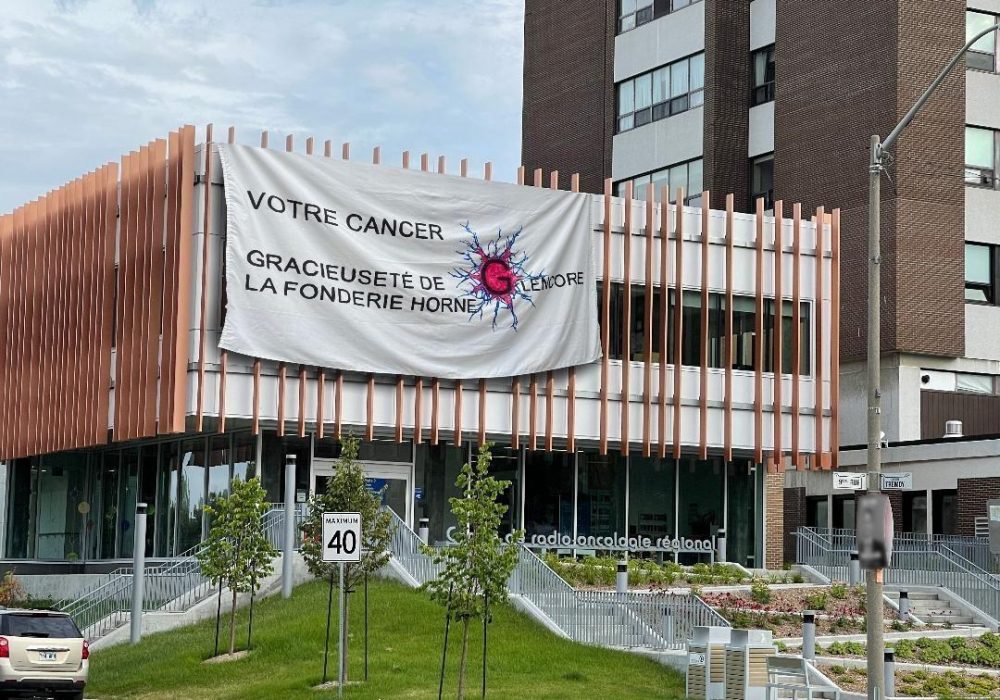
We are an affinity group from Rouyn-Noranda. Today, we are starting a series of symbolic and direct actions against Glencore. We will no longer accept dying to enrich this kind of of ruthless multinational corporation! We have dropped this banner on the cancer research center that is delaying its operations because of hiring difficulties – and we understand! People who work in the health field do not want to come to Rouyn-Noranda to be poisoned.
Comments Off on Announcing Creeker Vol 2 and The Creeker Companion Vol 2
Sep062022
Anonymous submission to MTL Counter-info
Creeker is a grassroots, anti-authoritarian zine series that aims to bring depth, variety, critique and continuity to the ongoing process of reflecting on the Ada’itsx/Fairy Creek blockade and related efforts. It is intended for creekers themselves, land defenders elsewhere, and the land defenders yet to come.
Last summer on so-called Vancouver Island, thousands of people moved through a de-facto autonomous zone spanning multiple watersheds. A constellation of struggle burned bright, welcoming into its fold a new generation of land defenders. We cannot begin to fathom the amount of stories of collective and individual experience that have piled up, but we also recognize how sleep deprivation, trauma loops, burnout, and the shock of returning to society can preoccupy our minds.
In response to an open invitation to contribute to this zine project, many have shared some of what they have begun to process. Creeker Vol 1 and Vol 2 include art, analysis, photography, history, personal reflection and poetry that were anonymously sourced from participants at the blockade.
Creeker Vol 2 expands on some of the themes of Vol 1 with eloquent and hard-hitting writing exploring the dynamics of autonomous forest defense in conflict with recuperative tendencies at Fairy Creek, and the ever-present treachery of environmental NGOs and the non profit industrial complex. Vol 2 also begins to revive vital histories of radical, uncontrollable resistance in the nearby Kax:iks/Walbran and Elaho Valleys, helping to bridge emerging generation gaps caused in part by decades of pacifist liberal whitewashing.
The Creeker Companion zines are curated to complement the Creeker zines with material that’s relevant to Ada’itsx and similar movements, but much broader in scope. Companion Vol 1 and Vol 2 both explore topics such as movement history, state repression, and thoughtfully critical approaches to identity politics. Vol 1 features mostly longer form pieces, while Vol 2 samples briefly from various material including essays, poetry, communiques and more, joined together with a playfully insurrectionary vibe.
In 1973, Pierre Elliott Trudeau enacted a regularization program resulting in 39,000 undocumented migrants living in so-called canada being eventually recognized as citizen. While there have been other regularization programs over the years, this was, by far, the largest one implemented [1].
You might have noticed that this large regularization program took place almost 50 years ago, by the father of the current prime minister, Justin Trudeau. And if there’s something that Trudeau can be relied upon, is to do some grand commemorative gesture for the occasion.
Because we are really in a perfect storm situation for migrant regularization. First, we are facing a serious labor shortage. Many essential jobs cannot find any takers because of the difficult work conditions and bad salaries. Undocumented migrants are currently working, of course, since most people cannot survive in canada without a job. But without a valid Social Insurance Number, many jobs remain inaccessible, most especially in government positions.
Second, there are already a lot of undocumented migrants in essential healthcare and food production jobs, because they are the shittiest jobs anyone can do. And we need them to continue to function as a society, a lot more than we need grubby bankers, tax haven accountants and slimy corporate lawyers, anyway. But it’s getting kinda shameful how the government ends up paying undocumented migrants for these jobs. Downright embarassing, even, given how badly they are treated.
And third, Trudeau’s minority government is in dire need of stealing votes from the left. Therefore, the Liberal government introduced Motion M-44 in May 2021 to get the ball rolling [2]. But while it might sound like a wide sweeping regularization program, let’s not be fooled: they want to steal votes to the left, while not alienating their racist right. As it stands now, it might only be a liberal regularization program: by and for the industry, the bankers, the stock market. And not for, you know, the actual people being currently refused entry to citizenship.
The reality of undocumented migrant lives
Ok, so why would we care? We want to destroy the so-called canadian state anyway, why would we want to see more people accepted by it? Why does citizenship in a colonial state matters?
Well, for starters, we don’t have in so-called canada the same infrastructure of support for undocumented migrants that there is south of the border. There are not that many non-profit organizations in here, and those present are often overwhelmed with people still clinging to the official citizenship pipelines. On the legal end of things, our racist provincial governments have not enabled the kind of loopholes we can see in California. And municipalities have very little power, especially since the police is controlled at the provincial and federal levels. Not that Projet Montreal’s “let’s fund the pigs no matter what they ask for” would have changed anything anyway.
Healthcare for undocumented migrants is a macabre joke. If you don’y have your “sun card”, you’re pretty much doomed. You either have to pay through the nose to see a doctor and get a prescription, and you still have to pay full price for medication. And that is if the doctor doesn’t denounce you to the pigs. Them doctors sur take that Hypocrite Oat to heart…
Anarchists in Tio’tia:ke (Montreal) will recall one undocumented comrade who gradually went blind, as she could not afford the doctors’ appointments and medications which were available to all of us. And another comrade, whose leg almost burst open from blood circulation problems, and who could not affort to get treated either. Living undocumented has a cost, a cost measured in human lives.
School ain’t much better either. Undocumented migrants recently won the right for their children to attend middle and high school, but it remains very limited [3]. They are always at risk of being denounced. Some schools will break government guidelines and refuse undocument children nonetheless. Because why a racist government would sanction a racist administrator? For those who overcome these hurdles and manage to finish high school, few prospects await them. And what opportunities are open nowadays to someone with just a high school degree?
Because work is ever so much worse. Undocumented migrants cannot complain to the CNESST, and are therefore not protected by health and safety guidelines, nor by minimum wage laws. Recent articles showed how official temporary migrant workers are mistreated in fields and farms, what do you think happens to undocumented migrants?
And that’s not covering the worst of the worst, the fucking police. Undocumented migrants are constantly one police stop away from getting deported. And guess what happens when they actually need to be protected from a rapist or a violent spouse? The SPVM is well-known as a “Deportation Machine That Hunts Down Non-Status Immigrants”, to quote an article from the McGill Daily [4]. And they probably jerk off while doing it too.
So yeah, fuck the state, destroy it, burn it to the fucking ground. But still, that shitty piece of citizenship paper still means a world of difference between life and death for a lot of people. And with a theorized 500,000 undocument migrants here, that’s a lot of pain and suffering that could be alleviated.
The fascists and liberals have no problem sleeping on the blood and bones of undocumented migrants. Can we?
What are the obstacles to expect?
If you follow federal politics, then it is obvious that Trudeau is quite heavy on symbolism, and pretty light on substance. The Trudeau government makes a lot of grandiose gestures but is often lackluster when it comes to actual action. After all, their goal here is not to actually regularize migrants, but just to steal some vote to the left. And maybe provide some cheap labour to their financiers.
So there’s a real chance that the regularization proposed might only be window dressing. That it might only regularize people who would be regularized eventually anyway. So we must put pressure on the government to ensure this regularization proposal is as wide and inclusive as possible. the canadian-based “Migrants Rights Network” has compiled a list of demands, their main ones being [5]:
The goal of the program must be regularization of all undocumented people residing in Canada.
The program should be permanent and available on an ongoing basis because the factors leading to people becoming undocumented will continue for the foreseeable future.
Applications must be simple, such that undocumented people are able to apply themselves, online via mobile devices or on paper. There should be a large selection of acceptable documents for the purposes of establishing identity and residence in Canada, none should be mandatory.
People should not be excluded based on past failures to comply with immigration law.
There must be a prohibition on detentions and deportations throughout the course of the regularization program; without this, the regularization program will fail as undocumented people will not apply.
No one should be deported if their application is rejected.
///
The other major obstacle is, quite obviously, the racist and white supremacist provincial CAQ government. The CAQ made no secret that they want full control of immigration in Quebec. They have already made legally dubious moves against immigrants, whether through:
Bill 9, which threw 18,000 immigration dossiers in the trash,
Bill 21, which blocks many non-christians from teaching jobs,
Bill 96, which forces migrants to learn french in six months.
The CAQ would almost certainly try to block any regularization efforts, unless the undocumented migrants were both french and white.
///
And finally, the other obstacle would probably be your unfriendly neighborhood fascist. The far-right propaganda against migrant workers is widespread, the most popular being that more foreign workers means lower wages and fewer housing opportunities.
First, let’s be honest about wages. The pandemic convinced a lot of baby boomers to retire a bit earlier than expected, leaving a large number of jobs available. Simple free market economics would theorizes that a workers’ shortage would therefore mean salaray raises. Obviously, that hasn’t been the case so far, and nothing shows that it will improve in the future. Or even match the inflation.
Evidently, our capitalist masters will not increase wages, no matter what. They would rather let the job left undone, and pile the work on the remaining workers, than pay us a penny more. The only significant gains made in recent months were in unionized jobs, and only after difficult struggles, and often long strikes. As the IWW slogan goes: if we want better work conditions, we need to organize. The “free market” has always been stacked against workers: a few more migrants, who are already here and already working anyway won’t change a damn thing.
Second, housing. As housing committees in Tio’tia:ke and elsewhere keep hammering: we don’t have a housing shortage, we have an affordable housing shortage. There are a shittons of apartments held empty for speculation purposes. The financiarization of the housing market means that you are no longer dealing with your regular scummy landlord, but with a scummy stock market broker landlord. Our old landlords could pressure us as much as they wanted, but in the end they needed at least some money to pay their mortgage at the end of the month. Deals could be cooerced, and limited rent strikes could work. Our new landlords have 50,000 appartments and don’t give a shit if a few of them don’t pay them for a few months, while they fill the paperwork to throw your ass out in the street at 2AM in -40 weather. Again, more migrants who already live here won’t change a thing either.
Or in other words, don’t punch down on comrades down on their luck. Punch up to the bosses and the landlords: they’re the own making all our lives miserable. And maybe punch your local fascist while your there.
What should we do?
The Trudeau government should publish a first draft of their regularization law in late September 2022. This should gives us an idea on where Trudeau want to go with that program, and subsequent reactions from the CAQ and the far-right should give us an idea of what kind of obstacles we would be facing.
It was easier to pressure the government in 1973 because the undocumented migrants included a large portion of white people, mostly war resisters from the united states fleeing the vietnam draft. We don’t have this luxury today. Any gain we make will have to be made despite the white supremacists currently vying for power.
But thankfully, others have paved the way before us. The 39,000 persons regularized in 1973 might sound like a lot, but it was merely 0.1% of the population of canada at the time. These 39,000 are massively dwarfed compared to recent regularization programs in other countries. In 1981, france regularized 132,000 migrants, or 0.2% of their population at the time, twice as many as canada. In 2005, spain regularized 570,000 people, or 1.3% of their population at the time. It is therefore possible to do it much better than in 1973, and the mobilization behind the regularization campaigns in france and spain can provide us with a lot of good arguments.
After all, these undocumented migrants are already here. They work with us, eat with us, live with us. It’s time they enjoyed the same rights that we all do.
///
The canadian-based Migrant Rights Network calls for days of action on Agust 16th and September 18th: https://migrantrights.ca/
[1] See: https://www.kairoscanada.org/wp-content/uploads/2020/08/The-Regularization-of-NonStatus-Immigrants-in-Canada-1960-2004.pdf for the different programs.
[2] See: https://www.ourcommons.ca/members/en/89339/motions/11528727 This was followed by a mandate letter to the minister of immigration: https://pm.gc.ca/en/mandate-letters/2021/12/16/minister-immigration-refugees-and-citizenship-mandate-letter It laconically only mentions “Build on existing pilot programs to further explore ways of regularizing status for undocumented workers who are contributing to Canadian communities”.
[3] See: http://www.assnat.qc.ca/fr/travaux-parlementaires/projets-loi/projet-loi-144-41-1.html (in French only).
Comments Off on Against Your Demands: Lessons from Occupy McGill
Aug012022
Anonymous submission to MTL Counter-info
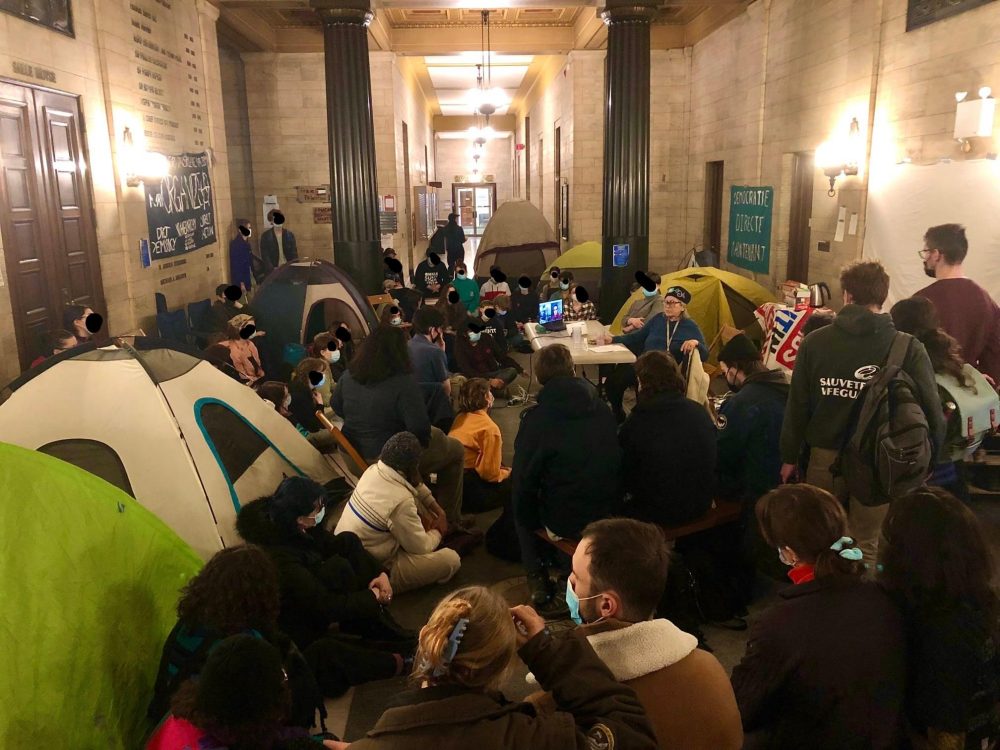
In 2022, I was an active anarchist in the two week occupation of McGill University. In the months prior to the occupation, I was part of the meetings that discussed the idea of pitching up tents in the Arts building. Back then, we were just 6 people at a picnic table. I witnessed the successes and failures of the occupation (and of its offshoots at Concordia and UdeM) but until now have not written anything on the subject.
Earlier this month, an international call to action was launched: “End Fossil – Occupy“. In a Guardian opinion piece, students are urged to “occupy our campuses to demand the end of the fossil economy.” This call seems to follow the example set by McGill, which has received somewhat broad attention. However, it fails to take key lessons from the McGill experience. By explaining these lessons, I am hoping to influence people who are thinking of organizing an occupation (which I still strongly encourage), and to challenge dominant notions of what a movement needs to be. Above all, we are past making End Fossil’s demands.
Purely and simply, the success of the McGill occupation was rooted in two guiding principles: 1) it refused to just be about the climate, and 2) it refused to make demands. Without a doubt, the occupation was successful. Up to 25 people a night slept in the lobby of the Arts building. Our public assemblies surpassed one hundred attendees. Audiences were often several dozen at film screenings, workshops, reading circles, and discussions which happened on a daily basis.* Every day you could show up, no matter who you were, and be fed breakfast, lunch and dinner. A few days into the occupation, several crews ran riot with spray paint through McGill, tagging up security vans and walls with slogans like “Occupy Everything” and “Students: Remember your Power.”
People showed up, not because of the specific issues we brought up, but because of the insurrectionary energy that was created. We printed and handed out hundreds of zines on pretty much everything but the climate. Educational sessions were also hardly-ever climate-related. Instead, the ideas being discussed centred around anarchist pedgagogy. People’s worldviews were not just being reemphasized (as they are when listening to yet another droning rad-lib environmentalist speech), but challenged or developed.
As a student movement, it was important that we did not make demands or centre on any specific issue. We were a place to locate people with a variety of concerns. Some of the most loyal comrades at the occupation were not there because of climate-related anxieties. Participants in assemblies often discussed issues under the sun that touched on anything-but. We cast a broad net, and created a broad base. This wider focus allowed us to then bring to bear a radical critique of all hierarchy, all forms of domination, and to propose revolution, not reform (no matter how green).
I am going to be honest here. If I were to see another purely narrow environmentalist occupation – I’d keep walking. Most working class people also rightly distrust this messaging. From Occupy, Shut Down Canada, to the George Floyd uprising, it is clear that people want insurrection. You still want reforms? Fine. But let’s not ask for reforms. Let’s build a revolutionary movement and allow politicians to panic and try frantically to slow us down with concessions. That is, let’s not be ineffectively boring.
I do not want to pretend that every participant in the McGill occupation was a born-again anarchist. In fact, many campers complained that our intentions were outwardly vague. Some raised concerns that people were not participating because, without demands, they couldn’t understand what was going on. First, it’s worth saying that virtually everyone who claimed not to understand what we were doing were more conservative or liberal students who would never have participated anyway. But more crucially, we fail to bring people into our movement not because we lack demands, but because we are not effective enough at illustrating to others why joining our projects will change the world. This is harder to do: it takes good discussions, fun actions, effective assemblies, clear strategy, strong zines, and organizing. But it is possible.
It is certain that some of our camp organizers did not have a strong enough grasp of radical politics to explain convincingly why we don’t make demands but struggle for insurrection. However, this is not a barricade; it’s a small hurdle that one or two deliberate group conversations could have fixed.
The experience of Concordia’s short occupation was entirely different. The occupation at Concordia was quickly co-opted by the student union. Power and responsibilities became increasingly concentrated in a small set of vocal elected students who, already burdened with union responsibilities, could hardly carry out the tasks they took on. Union representatives began asking opponents to leave the occupation. Other students left by themselves — fed-up by the union or not at all enchanted. Any initial radical insurrectionary energy was sapped out by narrow syndicalist politics. I briefly attended the University of Montreal occupation. From what I observed (although more pleasant), the singular focus on the school’s fossil fuel investments had become hegemonic; and the occupation concentrated in an offshoot of Greenpeace.
There was, of course, a core limitation to Occupy McGill’s strategy. The occupation was only powerful as an attractive / communal symbol of resistance and rallying point for radical ideas. To break past this point, it would have had to go on to actually shut down the university, spread into a strike, create new combative student organizations, practice new tactics like property destruction, or spill into neighbouring communities. These are also training, coordination, and mobilization tactics for revolutionary action. They go further and rally more people. We do so until we hit a moment where we finally revolt – and start winning.
We have a world to win. Not just the end of the fossil economy, but a whole society that could be created from solidarity. The landlords, police, capitalists, politicians, machos, and anyone calling themselves “authority-figures,” will be abandoned and replaced by cooperation. The university will not just be green but be transformed beyond the alienation, the work-to-death ethic, and the carreerism that infects it today. Unless we take direct control, we will be lied to, taken advantage of, and used for others’ political ends. We don’t have patience for the piecemeal reforms that have failed us for hundreds of years. There is so much to do and so little time to do so. It is time we strike.
That is our only demand, not to authorities, but to one another.
*Films viewed included Street Politics 101 (by Submedia), and two documentaries on the Rojavan Revolution. Reading circles read a selection on revolutionary education from Democratic Autonomy in North Kurdistan, and Autonomous Education in the Zapatista Communities: Schools to Cure Ignorance. Discussions included a discussion on anarchist pedagogy, a discussion on anarchism, a workshop on the just transition framework, a workshop on accessibility, and a talk by a long-time Mohawk activist. Zines included “Education for Liberation not Corporation” (by Divest McGill) “Anarchism: Towards a Revolution in Montreal,” “Blockade, Occupy, Strike Back,” and “A Recipe for Nocturnal Direct Action.”
Comments Off on Call for an International Anarchist Week of Fun August 14th-21st
Jul202022
Anonymous submission to MTL Counter-info
We are tired of being serious. We are bored with dry meetings, solemn marches, and being told to read this or that text written to convince people that anarchism is worth their time. We are exhausted with inaction being the consequence of feeling like we have to get everything right.
As anarchists, what we truly want is everything, but in this very moment, what we really want is to have some fun.
We believe that anarchy should be a verb; not just a set of ideas one thinks inside one’s head but of actual follow through on those ideas. We think that being anarchists means that we should fight for a world worth living in, and we believe that any world worth living in absolutely requires insurmountable feelings of joy. Only we can make it happen.
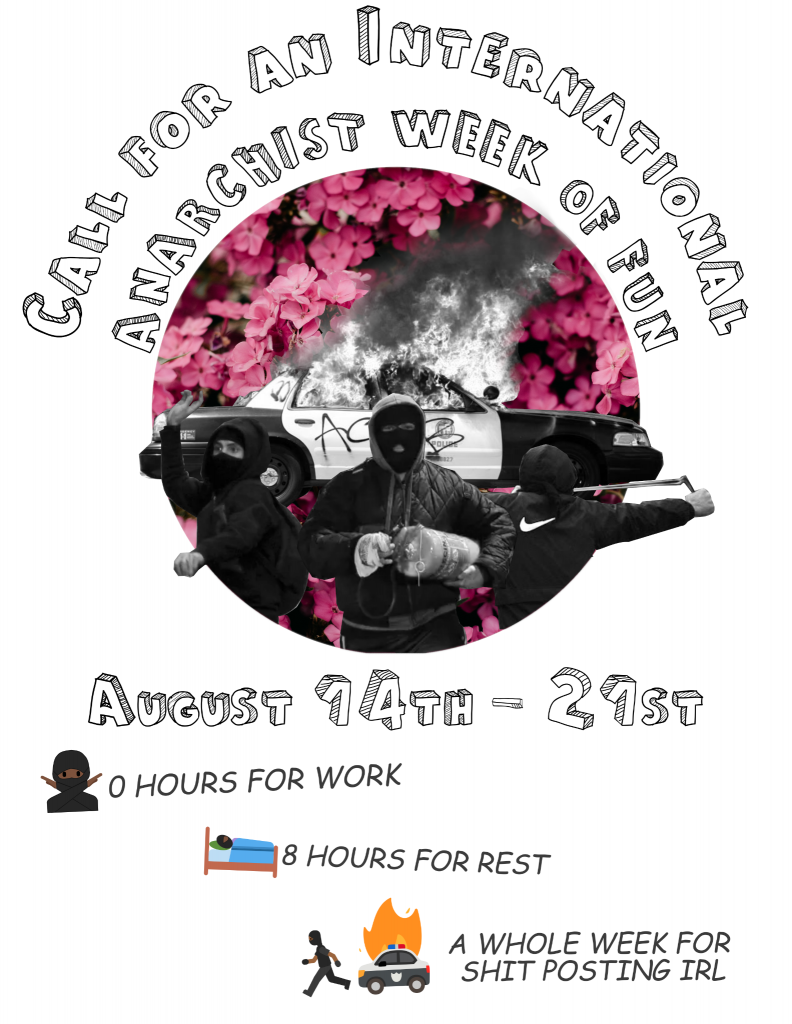
This is a call to action for an Anarchist Week of Fun. August 14th-21st, we want to see anarchists of all stripes to participate in throwing parties, pulling pranks, letting loose, and having some motherfucking fun.
There are many ways to participate and we encourage creativity & innovation. But, if you’re at a loss for how to have fun (as we tend to be), here are some suggestions;
Throw a party. Have an orgy. Ding dong ditch the mayor. Break stuff. Make a fancy meal for your friends. Climb something real high and see what it looks like up there. Pull a friendly prank on another milieu. Pull a mean spirited prank on the city. Have a dance party in the street. Throw a surprise party for a dog. See if you can put your whole fist in your mouth. Render a parking meter useless. Try hormones for fun. Do a banner drop. Piss on a cop’s grave. Troll an open house in your neighborhood. Shitpost irl. The world is your playground. Get out there and have a good time.
Write a report back & submit it to your favorite counter-info website.
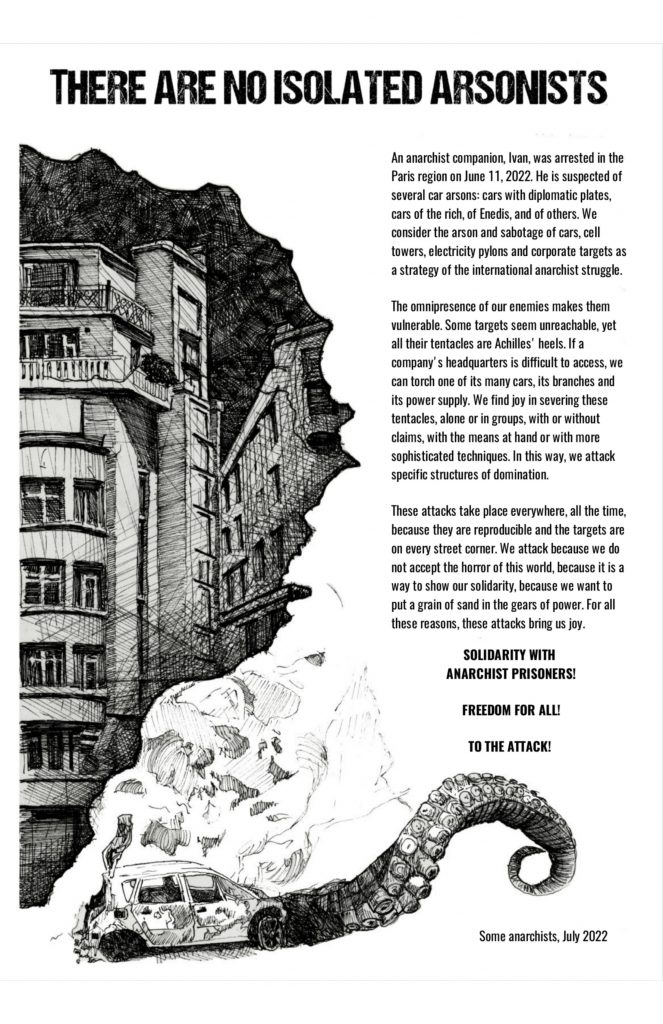
An anarchist companion, Ivan, was arrested in the Paris region on June 11, 2022. He is suspected of several car arsons: cars with diplomatic plates, cars of the rich, of Enedis, and of others. We consider the arson and sabotage of cars, cell towers, electricity pylons and corporate targets as a strategy of the international anarchist struggle.
The omnipresence of our enemies makes them vulnerable. Some targets seem unreachable, yet all their tentacles are Achilles’ heels. If a company’s headquarters is difficult to access, we can torch one of its many cars, its branches and its power supply. We find joy in severing these tentacles, alone or in groups, with or without claims, with the means at hand or with more sophisticated techniques. In this way, we attack specific structures of domination.
These attacks take place everywhere, all the time, because they are reproducible and the targets are on every street corner. We attack because we do not accept the horror of this world, because it is a way to show our solidarity, because we want to put a grain of sand in the gears of power. For all these reasons, these attacks bring us joy.
Solidarity with anarchist prisoners! Freedom for all! To the attack!
Anti-fascist demonstration at the trial of neo-Nazi Gabriel Sohier Chaput
The Montréal Antifasciste collective invites comrades and allies to join us outside of the Montréal Palais de Justice on the final trial date of neo-Nazi ideologue and propagandist Gabriel Sohier Chaput. The struggle against the far right, white supremacy, neo-Nazism, and all other fascistic and hateful ideologies is first and foremost a matter of community self-defence, and not of police repression or court proceedings.
From 2012 to 2018, using the pseudonym “Zeiger,” Sohier Chaput was involved in a number of neo-Nazi projects, including the Daily Stormer website and the Iron March forum. He is now charged with hate speech in connection with a single article out of the hundreds he has written. (Read Montréal Antifasciste’s exposé on Zeiger here: https://montreal-antifasciste.info/gabriel-sohier-chaput-aka-zeiger.)
The first three days of his trial, held last February and March, revealed a botched police investigation and a poorly prepared prosecution, which is all the more galling given the overwhelming mass of evidence already assembled by journalists from the MontrealGazette in a series of articles published in spring 2018 based on research carried out by anti-fascist activists. (Read a summary of the first three days of the trial at: https://bit.ly/3nDhzHn.)
At the time, Montréal Antifasciste wrote: “It is clear that the police and the crown completely ignored our work and that of the Gazette journalists who publicly exposed Zeiger. . . . This shocking lack of preparation confirms two things that we have always known: 1) the police do not take the threat represented by the far right and neo-fascist currents at all seriously; 2) it is not in the courts that true justice is to be found but in community solidarity and self-defence.”
Sohier Chaput was never called to account for his central role in the Iron March forum, a key meeting place for neo-Nazi militants around the world who are disposed to engage in violence against their enemies, notably the Atomwaffen Division, an organization that recently made headlines in Québec following an RCMP operation in Plessisville and Saint-Ferdinand. The evidence shows that Sohier Chaput was an Iron March moderator, as well as having published numerous essays on the forum and having promoted the establishment of an international neo-Nazi network that was to include a clandestine terrorist wing. He also organized an immense digital archive of fascist works for this network and re-published James Mason’s Siege, the principal ideological text used by the Atomwaffen Division and the so-called “accelerationist” tendency of the international neo-Nazi movement. Sohier Chaput also joined other white supremacists at the infamous “Unite the Right” rally, in Charlottesville, Virginia, in August 2017, where an anti-racist activist was killed by a neo-Nazi.
There can be no doubt as to the central role that Sohier Chaput played in the neo-Nazi ecosystem from 2012 to 2018, a period marked by the Donald Trump presidency and the rise of the alt-right movement, just as there can be no doubt as to the contributions he made as an ideologue and a prolific propagandist. He himself has stated that he published hundreds of articles in which he unquestionably incites hatred against and encourages the harassment of Jews, Muslims, racialized people, LGBTQ+ people, feminists, progressives, etc. Nonetheless, this major propagandist of racial hatred is likely to walk out of court today entirely unscathed, because the police and the crown didn’t consider it necessary to make use of the abundance of evidence anti-fascists had gathered against him. At most, he will receive a symbolic sentence and then be turned loose to return to his toxic activities.
In a leaflet that will be distributed at the demonstration, the Montréal Antifasciste collective explains: “As anti-fascists and anti-racists, we believe that combatting the hateful positions of white supremacists cannot be left to the police and the courts. Rather, it is the responsibility of the community at large, in solidarity with the groups and individuals who are being targeted. It falls to each and every one of us to identify and flush out the Nazis and other fascists in our neighbourhoods, to expose, isolate, and neutralize them by any means necessary. It is also our responsibility to deal with anyone who tries to follow in their footsteps and emulate them. . . . Whatever the verdict in Sohier Chaput’s case, his punishment will certainly not be commensurate with all the harm he has caused. In the final analysis, far from the closed doors of the Palais de Justice, our communities are responsible for our own safety. We must organize ourselves to resist the harm done by racists/sexists/homophobes/transphobes like Sohier Chaput. We must deny Nazis, white supremacists, and other fascists space to grow and develop. Finally, we must all continue to fight the far right and the fascist threat in our daily lives, at our workplaces, in our neighbourhoods, in our cultural spaces, and everywhere else for as long as it takes!”