Anonymous submission to MTL Counter-info
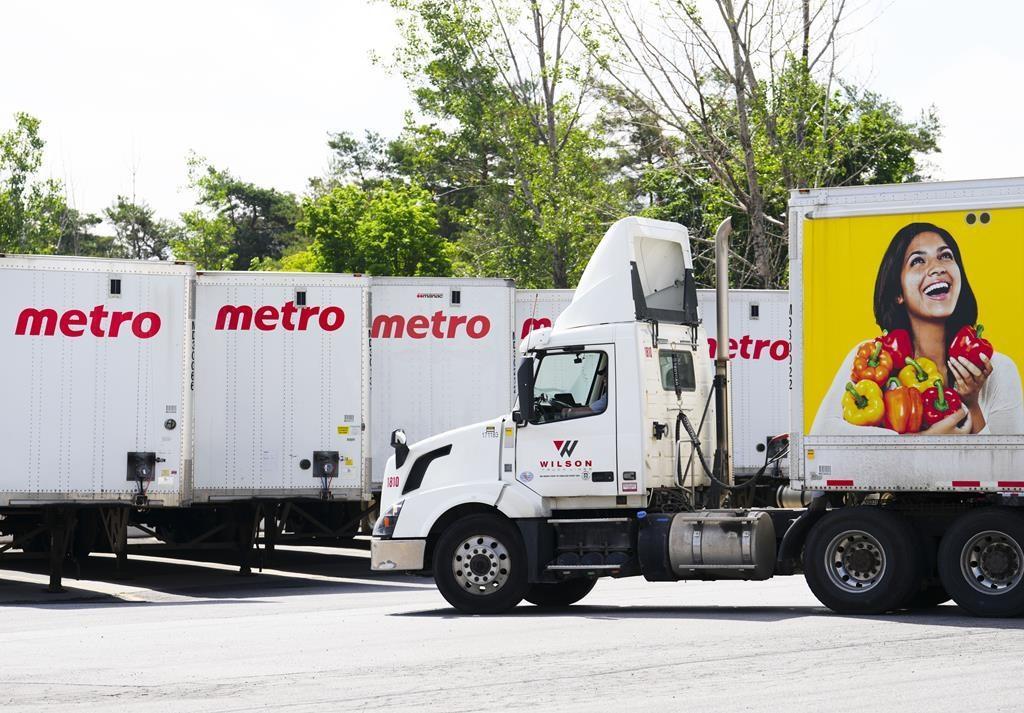
Hi Metro, are you still wondering who these people are who broke into the courtyard of your distribution center in Sandy Hill? Who effortlessly drilled holes in the tires of your trucks — tweny-five to be exact — and sabotaged the braking system of six more? Who completely covered those same trucks with paint? Forcing you to wash it off quickly the next morning so you wouldn’t have to drive across town saying “Eat the Rich” and “Fuck Metro.” Oh, but wait, you couldn’t, tires were flat! As you could read on one of your trucks: no tires, no profits, right?
Well look no more, it’s us! Just Some Other Bitches Expropriating Your Shit, or as we like to call ourselves: SOBEYS. Yeah, like your rival supermarket chain in Canada. Maybe were we jealous of your reported 2025 net earnings exceeding $1 billion? Anyways, we easily found the address of one of your distribution centers and decided to make it not yours anymore. Reminding you that even when you try, you don’t have control over what you think is yours.
So go ahead, keep spending more money on security guards, maybe they’ll go on killing people in grocery stores . While you try to stop us from stealing some cheap food, we’ll slash your thousand-dollar tires. Inspired by the Robins des Ruelles in Quebec, we decided to give it a twist, hitting higher up in the chain. And if you’re wondering, yes, we can absolutely go higher.
Kisses!
** And for friends who might be wondering, an effective way to sabotage a semi-trailer’s braking system is to fill the two connecting lines that link the trailer to the tractor with expanding polyurethane foam. These lines look like valves; they are very accessible and are almost always located in the same place on a trailer (in the lower right corner). They allow compressed air to flow from the tractor to the trailer and transmit the signals to apply and release the brakes. The foam renders the trailer inoperable, since it becomes impossible to connect it to a tractor (and therefore to release the breaks), while posing no risk to anyone; whether it’s us doing it, the driver, or other folks on the road.