


Anonymous submission to MTL Counter-info
A discourse attached to an affect in relation to demonstrations has percolated on the margins of the milieu of late. “I’m not really interested in demos right now”, “Demos are very limiting”, they say.
The leftist tendency to make calling a demo the default response to social problems has rightly attracted criticism. But these critiques are now being used to mask an entirely different position, according to which no demos are worth our time. I feel confident that a take-it-or-leave-it approach to such a wide class of tactics is rarely helpful in developing a coherent projectuality.
I find it easy to fall into a militaristic approach to combative demos. Will the cops be flanking us? Have I pre-scouted the terrain? Will we have a reinforced banner unit? Such questions can obscure that the primary level on which a demo gains force is social. Do we believe in what we’re doing together and why we’re doing it? Is this our fight? Are we invested in telling ourselves and others that it’s not? Who will I be able to make decisions with? Have we made space to acknowledge our fears? Do we genuinely believe we can win? The answers to these questions might have more bearing on whether a hundred people can overrun twenty riot cops.
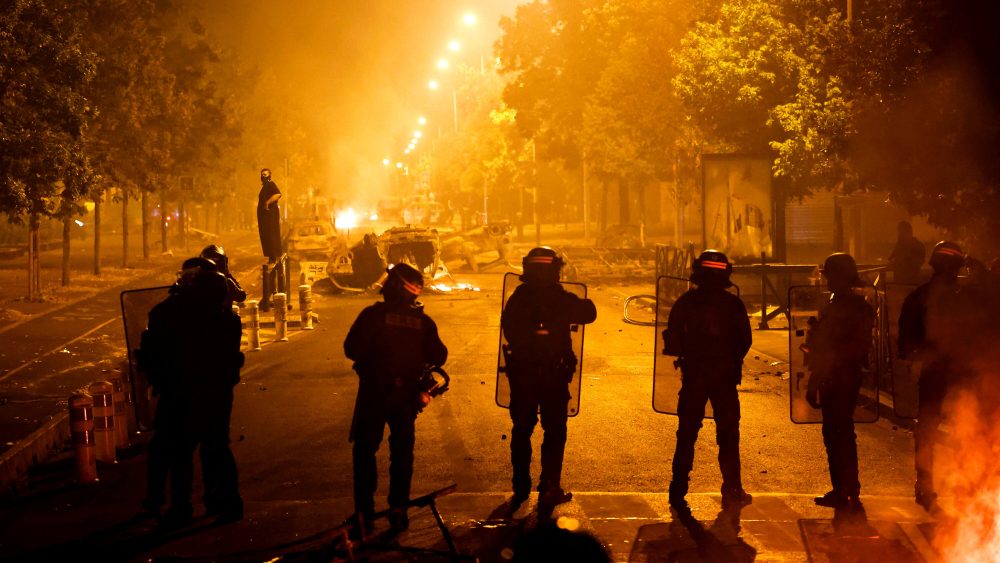
The critics of demos are careful to draw a distinction with riots. Of course we like riots. But they hardly engage with the reality that most riots in our context arise from demos. Rather than exploring the conditions that make it possible for demos to turn into riots and how anarchists could create them more often, they simply oppose the two forms, one being reformist, the other radical. And they ignore that many of the skills that allow anarchists to act with intention in riots are developed in demos, especially in a context like ours where the latter frequently give rise to (brief) disruption and clashes with police. Communicating effectively within a crowd, accurately assessing threats and opportunities in a chaotic environment, street fighting, and dispersing safely are all much easier when it counts the most if you’ve already practiced these skills in somewhat lower-intensity contexts.
Don’t take this personally – I want more riots for all of us – but I suspect that many of the comrades fairly new to combative organizing who echo these generalizations about demos have never been in a genuine riot. I mean like one where you can stroll to the jewelry store in the middle of downtown to loot it, lighting fires along the way, no cop in sight, with the knowledge that three other groups of a hundred or a thousand people are wreaking havoc elsewhere. Am I holding out an exceptional outcome for the purpose of romanticizing an outdated form? A social revolution will see such exceptions leap into the lived experience of millions. What combination of combative offerings lies on the path from here to there? Only the mental rigidity of dogmatists answers in advance, in the singular, or to the exclusion of vast fields of autonomous activity. They say they want a social revolution.
I recently heard a comrade say they were able to enjoy demos again after they stopped taking them so seriously. Maybe that’s not possible for all of us, but I think there’s some wisdom here. Is there a source for the lighter affects of curiosity, exploration, and joy beyond the beliefs and practices we ourselves bring to the table? When comrades gather together to prepare for a demo, could it be in the style of planning an elaborate practical joke on the pigs?
The argument is made that demos are reformist. Indeed, even combative demos are often organized, if implicitly, around demands to the authorities. What can a group of resolute comrades do in such situations? Not much, unless they have already thought (for example) about how to give out a leaflet, paint a banner, leave the emcee and their sound truck behind at the meeting point. The banality of their immediate cause, as we know, is the calling card of revolts throughout history.
The real toll of physical injuries at the hands of police weighs on some comrades. But the conclusion that anarchists instead should only do covert attacks in small groups is mistaken, because the latter carry a different but just as consequential risk. You can execute your operational security perfectly time after time, until a series of small mistakes puts you in prison for years. Because many more people in our context participate combatively in demos than in impactful covert actions, we have less experience with this risk and it is less on our minds, but that makes it no less real. Does the psychic and physical toll of prison, of the State’s attempt to sever us from community, mean that people shouldn’t do clandestine attacks? No, the point is that repression in one form or another comes for everyone who chooses to fight domination in a meaningful way, regardless of tactics, which is why anarchists have a long history of preparing for and responding to it with practices of care and combative solidarity.
When the attitude that casts handing out a lawyer’s number in a demo as support for the legal system goes on to treat the skill of feeding people at a blockade (blockades are also bad) with the same dismissiveness, it’s hard not to see a thinly veiled machismo at play. This dynamic weakens our stance against repression, in one case rejecting the act of giving people a tool that could be of immediate help in an interaction with the State, and generally by devaluing the types of contributions that disproportionately make up the work of supporting prisoners and defendants.
Radical in-groups are known for a habit of looking down on others. Despite making some more nuanced points than the wider discourse it partakes in, the recent offline text “Obsessing over demos” literally opens with the image of the intrepid author(s) looking down from a mountain trail. Most of the time, I find a scornful and condescending attitude toward others doesn’t emerge from a confident relationship to one’s own ideas, which is an important starting point for affinity.
Is it awkward to be defending (some) demos when the loudest subculture around them within the militant sphere seems to have lost the plot? A March 15th that won’t call itself a demonstration. A May Day that won’t call itself anti-capitalist. If someone dares post on the groupchat about a different event on the holy day of the demo, we’ll have a good laugh about it.
As the extremists taking the side of a contagious disorder sweeping away the certainties and rituals of authority, we place ourselves at a disadvantage if we forget our wins faster than the enemy forgets its losses. It was only a bit over a year ago, on Nov. 22, 2024, that just a few dozen militants forced multiple units of the SPVM riot squad to retreat down an alley, before attacking the site of an international summit. Despite the milieu’s over-reaction to the SPVM’s predictable revenge tour over the following months, demonstrations and anarchists’ relationship to them are not some unsolvable problem.
Some paths forward ought to be debated. How can we give different forms to the element of surprise? Where and when does it make sense to go hard? Is it possible to bridge some of the larger meanings we give to these moments?
Our concept of autonomous self-organization should not revolve around demos. If no demo is where you personally want to put energy, that’s okay. But if your implicit claim that no one should ever engage with combative demos can’t even stand up to the counter-arguments of the most casual insu book clubber, you might want to ask yourself some questions. We are beset by the tendency to develop politics and strategy around the limits of what we personally feel willing and able to do. In a decentralized movement that prizes autonomy, strategic missteps are normal. The blanket dismissal of demonstrations as a tactic is one.